When it comes to cleaning a sisal rug, the golden rule is simple: avoid moisture at all costs. Since these beautiful, natural fibres soak up liquids like a sponge, you absolutely must use dry cleaning methods and act fast on any spills. Getting it wrong can lead to permanent watermarks, browning, or even shrinkage.
Why Sisal Rugs Demand a Different Cleaning Approach

Before you even think about reaching for your usual carpet cleaner, it’s vital to understand what makes sisal so different. Unlike synthetic materials, sisal fibres come from the Agave sisalana plant. This natural origin gives them their gorgeous, earthy texture but also a critical trait you have to respect: they are incredibly absorbent.
Think of each sisal fibre as a tiny, thirsty straw. This quality, known as being hygroscopic, means they readily soak up any moisture they encounter, from a spilled cup of tea to the humidity in the air. This is precisely why your standard steam cleaner or wet shampooer is the sworn enemy of a sisal rug.
The Dangers of Water on Sisal
Introducing too much moisture to sisal can kick off a chain reaction of problems that are difficult, if not impossible, to reverse. Knowing these risks is the first step in learning how to look after your rug properly.
The main issues you could face include:
- Water Stains and Browning: As water gets absorbed, it can displace the natural tannins within the fibres. When the rug eventually dries, these tannins get pulled to the surface, leaving behind ugly dark brown or yellow rings.
- Shrinkage and Warping: Wet fibres swell up and then shrink as they dry, but often not evenly. This can make the rug warp, buckle, or pull away from its edges, permanently changing its shape and stopping it from lying flat.
- Mould and Mildew: Especially in the UK's often damp climate, a wet sisal rug is the perfect breeding ground for mould and mildew. This not only causes a musty smell but can also be a health risk and break down the fibres over time.
To help you remember the essentials, we've put together a quick reference table.
Sisal Cleaning Do's and Don'ts Quick Guide
Here's a straightforward summary of the best practices for sisal rug care. Following these simple rules will help you avoid the common pitfalls and keep your rug looking its best.
| Action | Why It's Important | Potential Damage If Ignored |
|---|---|---|
| Do blot spills immediately | Prevents the liquid from soaking deep into the fibres. | Permanent water stains, browning, and discolouration. |
| Don't use a steam cleaner | The high heat and moisture will cause irreversible damage. | Severe shrinkage, warping, and colour bleeding. |
| Do use a dry cleaning powder | Absorbs dirt and grime without introducing harmful moisture. | N/A – This is the recommended safe method. |
| Don't rub spills vigorously | Rubbing pushes the stain deeper and can fray the fibres. | Spreading the stain and damaging the rug's texture. |
| Do vacuum regularly | Removes surface dirt before it gets ground into the weave. | Abrasive dirt particles will wear down the fibres over time. |
| Don't place in damp areas | Constant humidity will be absorbed, leading to mould. | Musty odours, fibre decay, and potential health issues. |
Sticking to these guidelines is the key to preserving the natural beauty and longevity of your sisal rug.
Because sisal fibres absorb and release moisture based on the humidity around them, conventional wet cleaning methods are just a recipe for disaster. The risk of shrinkage and discolouration is simply too high for these beautiful but sensitive rugs.
This sensitivity is why specialised techniques are so important. Many UK-based professional cleaners, for example, use dry compound systems to lift dirt without moisture. These systems use absorbent particles to clean the fibres safely—a method you can replicate at home with the right products. Our complete guide on how to clean a sisal rug will walk you through the safest at-home methods step-by-step.
Your Essential Toolkit for Safe Sisal Cleaning
Before you even think about tackling a spill or starting a deep clean on your sisal rug, getting your supplies in order is half the battle. Successful sisal care is all about a gentle, moisture-free approach. So, you can forget about steam cleaners, wet vacs, or any harsh liquid chemicals – they’ll do more harm than good. Your toolkit should be simple, but effective.
The single most important tool in your arsenal is the vacuum cleaner, but not just any model will do. An aggressive, rotating beater bar is brilliant for synthetic carpets, but on sisal, it's a disaster waiting to happen. It can easily snag, pull, and fray those beautiful natural fibres, causing damage you can't undo.
What you need is a vacuum with a suction-only setting. A canister model with a hard floor attachment is also a great shout. This setup ensures you can lift away all the grit and dust without tearing at the weave.
Essential Cleaning and Blotting Supplies
Beyond vacuuming, your go-to items for day-to-day maintenance and those inevitable spill emergencies are all about gentle agitation and quick absorption. Trust me, scrambling to find these things after a spillage can be the difference between a minor clean-up and a permanent stain.
Have these bits and bobs on hand:
- A Soft-Bristle Brush: Something with natural or soft synthetic bristles is perfect for working a dry cleaning powder into the rug’s weave without being too abrasive. An old clothes brush or a soft-bristled scrubbing brush will work wonders.
- Clean, White Absorbent Cloths: You can't have too many of these. Microfibre or plain cotton cloths are essential for blotting spills. Always, always use white or light-coloured cloths to avoid any accidental dye transfer onto your rug.
- A Dull Knife or Scraper: For solid or semi-solid spills like mud or food, a blunt-edged tool lets you lift the mess off the surface without pushing it deeper into the fibres. A butter knife is often the perfect tool for the job.
A common mistake is treating a sisal rug like a standard carpet. The key is to shift your mindset from "washing" to "absorbing." Your goal is to lift dirt and spills out of the fibres using dry methods, never pushing moisture in.
Finally, you’ll need a cleaning agent itself. A specialised sisal-safe dry cleaning powder is your best bet. These absorbent compounds are designed to cling to dirt and oils, which you can then simply vacuum away. For greasy spots in a pinch, a natural alternative like cornflour can be an absolute lifesaver.
The Complete Dry Cleaning Method for Your Sisal Rug
When your sisal rug needs more than a quick spot clean, a thorough dry cleaning is the safest and most effective way to go. Unlike traditional carpet cleaning that uses water (sisal’s number one enemy), this method uses an absorbent compound to lift out dirt without risking any of that dreaded water damage. It might sound a bit technical, but it's a straightforward process you can easily handle yourself.
The whole thing works on a simple principle: absorption. You're essentially using a dry, spongy powder to pull oils, dust, and general grime out of the natural fibres. Once the powder has grabbed onto the dirt, you just vacuum it all away.
Preparing Your Rug for Cleaning
Before you even think about opening the dry cleaning powder, the most important first step is a really good vacuum. Don't rush this. The aim is to get every last bit of loose dust, pet hair, and surface debris out of there. If you skip this, you’ll just end up grinding that dirt deeper into the weave when you apply the cleaning compound.
Using a vacuum with suction only (turn that beater bar off!), go over the entire rug slowly. I always work in a grid pattern—first vacuuming the full length of the rug in overlapping rows, and then doing it all again across the width. This helps make sure you lift particles from every angle of the tight weave.
Applying and Working in the Dry Compound
Once your rug is thoroughly vacuumed, it’s time for the dry cleaning powder. You can find plenty of sisal-safe products, which usually look a bit like damp, crumbly sawdust. The key here is to apply it sparingly but evenly. You want a light, consistent layer, not a thick blanket.
Start by sprinkling a small amount over one section of the rug.
Pro Tip: Never dump the powder in one big pile. It’s much better to shake it lightly from the container or use your hand to scatter it. This gives you far more control and stops you from using too much, which just means more to vacuum up later.
After applying the powder, take a soft-bristled brush and gently work it into the fibres. The motion is crucial: use gentle, back-and-forth strokes that follow the direction of the weave. You're not trying to scrub aggressively, as this can easily cause the fibres to fray. Think of it more like you’re massaging the powder in. If you're looking for more in-depth guidance on different techniques, our article on how to clean sisal carpet has some extra expert tips.
The image below shows a simple three-step process for a mild cleaning solution. Just remember, this kind of wet solution is only for tiny, immediate spot treatments, not for a general deep clean.
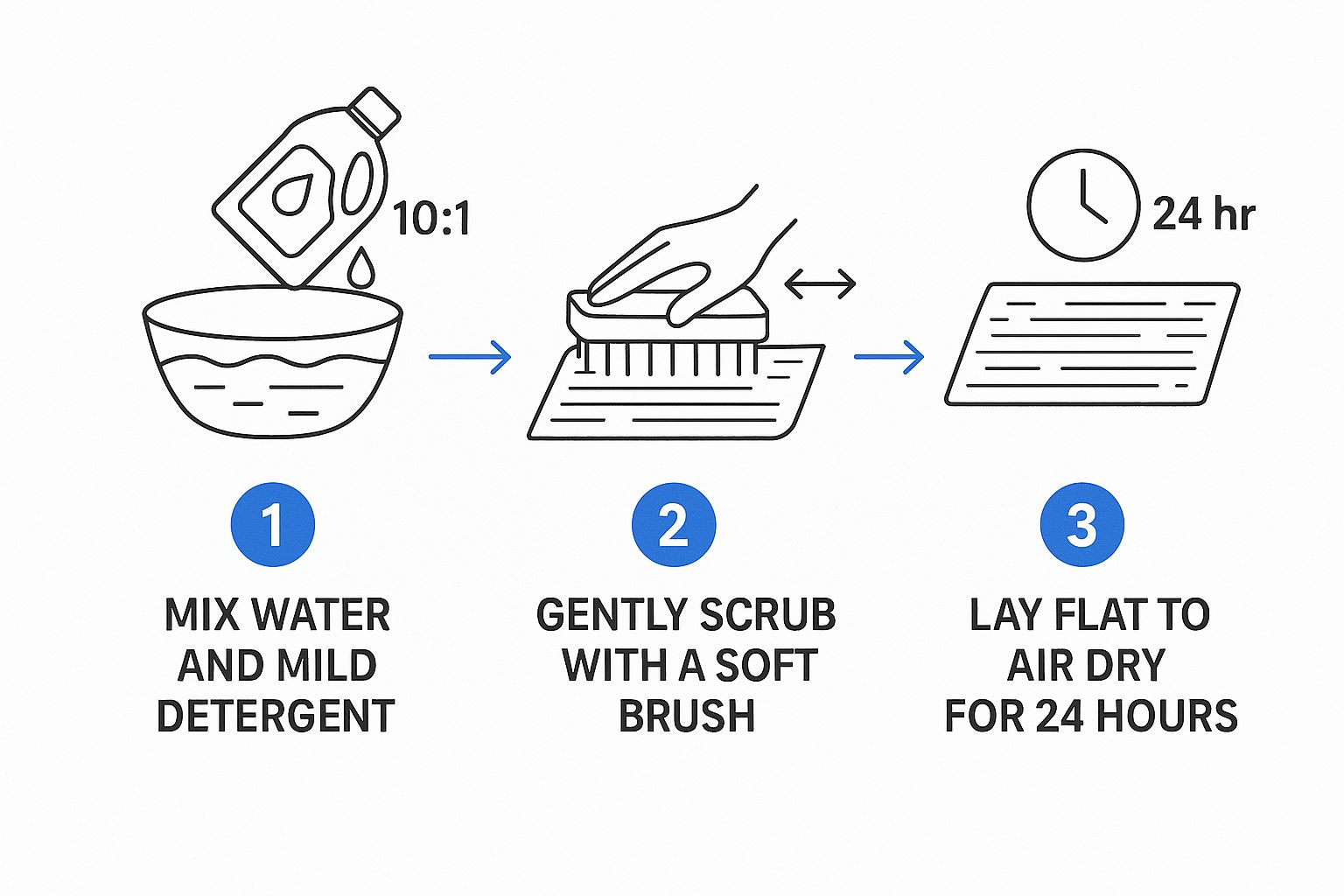
This visual is a great reminder of the importance of using minimal moisture and gentle, linear motions—principles that are just as important when you're dry brushing.
The Final and Most Satisfying Step
Now, it’s time to be patient and let the powder do its job. The recommended time can vary depending on the product, but a good rule of thumb is to wait at least 30 to 60 minutes. This gives the absorbent particles enough time to bond with any oily residue and grime trapped in the rug. If your rug is in a high-traffic spot or is looking particularly grubby, letting it sit for a couple of hours can make a real difference.
Once you’ve waited long enough, it’s time for the final vacuum. Go over the rug again with your suction-only setting, moving slowly and methodically to pull up all the powder and the trapped dirt along with it. You might need to make a few passes over each area to get it all.
When you're finished, your sisal rug should look noticeably brighter and feel much fresher—all without a single drop of water. This dry method really is the gold standard for keeping your natural fibre rug looking its best.
How to Handle Spills and Stains Immediately
Accidents are a part of life, even for the most careful among us. But a sudden spill on your beautiful sisal rug doesn't have to spell disaster. The secret to success is acting fast with the right technique. Forget everything you've learned about scrubbing traditional carpets; with sisal, the golden rule is simple: blot, never rub.
Attempting to rub a liquid spill will only push the moisture deeper into the highly absorbent natural fibres, all but guaranteeing an unsightly watermark. Worse still, the friction can fray the delicate weave, causing permanent damage to the rug's texture. Your first priority is always to lift the spill away from the rug, not drive it further in.
First Response for Liquid and Solid Messes
The moment a liquid like wine, coffee, or juice hits the floor, grab a clean, dry, white cloth. Press it firmly onto the spill to soak up as much as possible. Keep turning the cloth to a fresh, dry section and continue blotting until you can’t lift any more moisture out. This initial action is the single most important thing you can do.
If you're dealing with something more solid, like dropped food or a clump of mud, the approach is different. Find a dull knife or even a spoon and gently scrape the substance off the rug's surface. Always work from the outside edge of the spill inwards to prevent spreading it. Once you've lifted the main mess, you can vacuum up any leftover dry debris.
The unique sensitivity of sisal to water has led to some incredible innovations in the professional cleaning world. Many UK specialists now focus on moisture-free methods. For instance, some pros use solvent-based micro-sponges and dry compounds to gently lift dirt without introducing almost any liquid. These methods are often approved by industry bodies like WoolSafe, confirming they are safe for delicate natural fibres.
Tackling Different Types of Stains
Not all spills are the same, and knowing how to react to specific messes can make all the difference in saving your rug. Here’s a quick guide for common household accidents.
- For Greasy or Oily Stains: After blotting away any excess, generously sprinkle an absorbent powder like cornflour or salt directly onto the spot. Let it sit for a few hours—this gives it time to draw the oil out of the fibres. Afterwards, just vacuum it up thoroughly.
- For Dark Liquids like Red Wine: Blot immediately. If a mark remains, you can very sparingly use a cloth lightly dampened with a mix of white vinegar and water. Dab gently; the key is not to saturate the area. The mild acidity in the vinegar helps to break down the tannins in the wine.
- For General Dirt and Mud: This is one case where patience pays off. Let the mud dry completely. Trying to clean wet mud will just smear it deeper into the rug. Once it's dry and hard, you can easily break it up and vacuum the particles away.
To make things even easier, here's a quick-reference guide for some of the most common stains you might encounter.
Common Sisal Stain Treatment Guide
| Stain Type | Immediate Action | Recommended Treatment |
|---|---|---|
| Coffee/Tea | Blot immediately with a dry, white cloth. | Lightly dab with a mix of white vinegar and water. Dry thoroughly. |
| Red Wine | Blot immediately. | Dab with club soda on a clean cloth. Blot dry. |
| Grease/Oil | Scrape off solids, blot liquids. | Cover with cornflour for several hours, then vacuum. |
| Mud | Allow it to dry completely. | Break up the dried mud and vacuum the debris away. |
| Pet Urine | Blot thoroughly to remove as much liquid as possible. | Dab with a 1:1 solution of white vinegar and water. Blot dry. |
Remember, these are first-aid measures. For deep or set-in stains, professional help is always the best bet to avoid permanent damage.
The Crucial Final Step: Drying Completely
Any time you introduce even a tiny amount of moisture to your sisal rug—even from a slightly damp cloth—you absolutely must dry the area completely to prevent those notorious watermarks. This final step is non-negotiable.
Grab a hairdryer and put it on its coolest, lowest setting. Hold it several inches away from the damp spot, moving it around continuously to avoid concentrating heat. Keep at it until the area feels bone dry to the touch. This simple action evaporates any lingering moisture before it has a chance to settle and cause a stain. Getting this drying process right is just as important as the initial clean-up. For a deeper dive into stain removal and general care, our guide on how to clean sisal carpets provides additional detailed advice.
Proactive Maintenance to Keep Your Rug Looking New
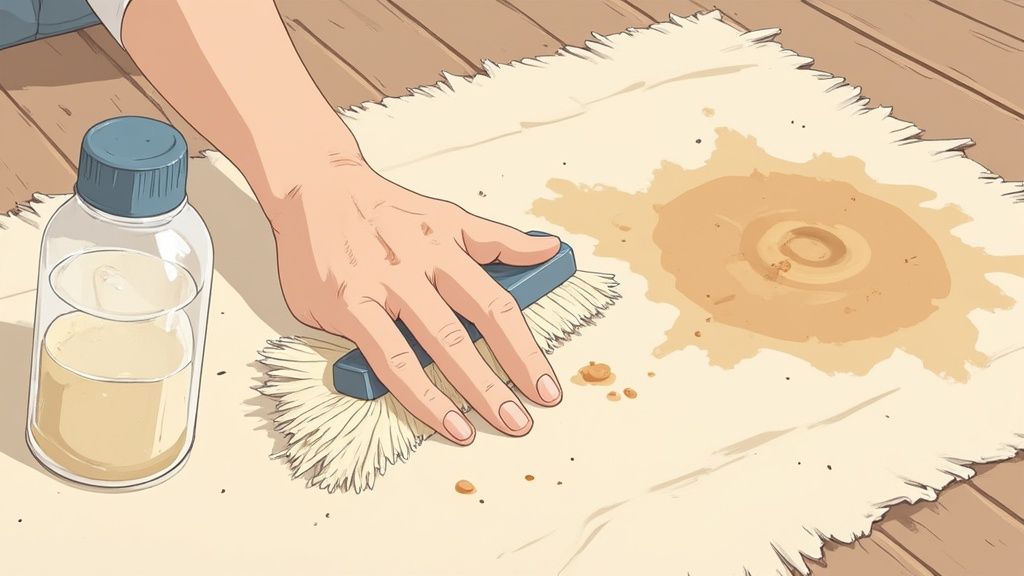
While knowing how to clean a sisal rug is important, the real secret to its long life is smart, consistent care that stops problems before they even begin. By shifting your mindset from reactive cleaning to proactive maintenance, you can preserve its natural colour, texture, and strength for years. This means less time spent on deep cleaning down the line.
This proactive approach all starts with a regular vacuuming schedule. Consistent vacuuming is absolutely vital for sisal here in the UK, as it can lift up to 80% of dust and dirt before it has a chance to get ground deep into the fibres. This one simple habit reduces abrasion and keeps your rug looking fresh. For more on how green routines can help, you can explore sisal rug care advice from UK experts.
Establish a Smart Maintenance Routine
Beyond just vacuuming, a few other simple habits can make a massive difference. Think of them as small investments in your rug’s future, helping you avoid the kind of wear and tear that can't be easily fixed.
- Rotate Your Rug: Every six months or so, give your rug a full 180-degree turn. This is crucial for rugs in hallways or living rooms, as it ensures one side isn't taking all the punishment from foot traffic, leading to much more even wear.
- Mind the Sunlight: Sisal’s beautiful, natural dyes are quite vulnerable to fading when exposed to direct sunlight. If your rug sits in a sunny spot, it’s a good idea to use blinds or curtains during the brightest parts of the day to protect its colour.
- Store It Correctly: If you ever need to store your rug, always roll it up—never, ever fold it. Folding creates harsh creases that can permanently break the brittle natural fibres, leaving a line you'll never get out.
The goal of maintenance is to treat your sisal rug like the natural material it is. By managing its environment—controlling sunlight, humidity, and foot traffic—you're working with the fibres, not against them.
Managing Humidity and Environmental Factors
Sisal’s highly absorbent nature makes it particularly sensitive to its surroundings, especially the dampness that's so common in many UK homes. High indoor humidity can cause the fibres to swell up, which can lead to a musty smell or even mildew if the room isn't well-ventilated.
A dehumidifier is a fantastic preventative measure to use in the room during damper seasons. This simple step helps keep the fibres stable and dry from the inside out. For more professional advice on looking after different floor coverings, have a look at our comprehensive carpet cleaning tips, which cover a whole range of materials. These straightforward, consistent actions are what true long-term sisal care is all about.
Common Questions About Cleaning Sisal Rugs
It's completely normal to have a few questions when you're getting the hang of cleaning a sisal rug. Their unique natural fibres can throw up some specific challenges, especially when the inevitable accident happens. Let's walk through some of the most common queries to help you feel confident in looking after your rug.
One of the biggest questions we get is about using water. The short answer? Only with extreme caution. Getting a sisal rug wet is usually a recipe for disaster. The absorbent fibres can swell up, shrink, or develop those dreaded brown water spots. For a tiny, fresh spill, you might get away with blotting it with a cloth that’s barely damp with a 50/50 white vinegar and water mix. The key, however, is to dry it immediately and completely with a hairdryer on a cool setting. For any general cleaning, a dry compound is always the safest bet.
What to Do in a Water Emergency
So, what if the worst happens? A big spill, a leak, or a pet accident soaks your sisal rug. The number one priority is speed.
First, grab some thick, dry towels and start blotting. You need to absorb as much of that liquid as you possibly can. Press down firmly to pull the moisture out from deep within the weave.
Next, you have to get the air moving. Prop the rug up on some blocks or chairs to lift it off the floor. Then, point fans at it to blow air across, under, and over the surface. If you have a dehumidifier, put it in the room—it will do an incredible job of pulling moisture from the air and the rug itself. Whatever you do, don't put it in direct sunlight to dry, as this can make the fibres brittle and fragile. For a really valuable rug, your best option is to call a professional with experience in natural fibre water damage.
A common mistake is thinking a little dampness won't hurt. With sisal, any residual moisture left behind after cleaning is a potential stain waiting to appear as the rug dries. This is why immediate and thorough drying is non-negotiable.
Handling Odours and Protection
Another frequent concern is how to get rid of smells, particularly from pets or just a general musty odour. Your best friend here is baking soda.
It’s a fantastic natural deodoriser. Just sprinkle a generous layer over the entire rug and let it sit for a few hours, or even overnight if you can. Then, simply vacuum it all up thoroughly. You’ll be surprised how much of that unwanted smell it can absorb. If you're dealing with a specific incident, you may want to learn more about how to remove pet urine from carpet for some extra tips.
Finally, people often ask if protector sprays are a good idea. Yes, they’re a very smart preventative measure. Applying a fabric protector spray made specifically for natural fibres like sisal creates an invisible shield that helps repel liquids. This gives you precious extra seconds to blot a spill before it has a chance to soak in. Just be sure to test it on a small, hidden corner first to check for any discolouration.