When it comes to cleaning sisal carpets, you have to throw out everything you know about standard carpet care. The golden rule is a dry-first approach. Because sisal is a natural plant fibre, it's incredibly absorbent and notorious for developing permanent water stains. You must avoid steam cleaning or soaking spills with water. Instead, your best friends are immediate blotting and quality dry cleaning powders to keep the carpet’s texture and colour intact.
Why Sisal Requires a Different Cleaning Approach
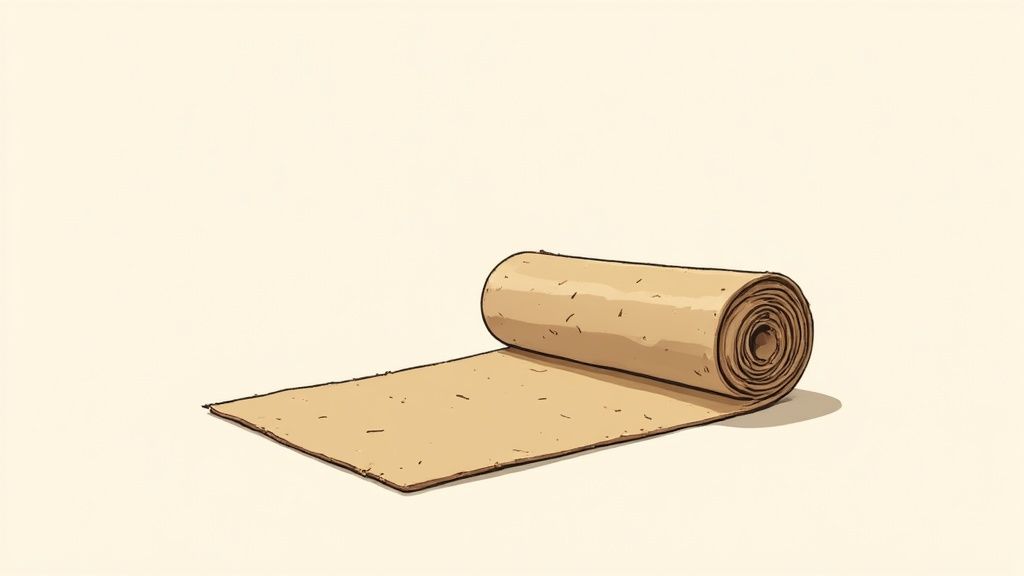
Before you even think about tackling a spill, it's crucial to understand that sisal isn’t your typical synthetic carpet. It’s made from the tough fibres of the Agave sisalana plant, and its natural makeup is both its biggest asset and its Achilles' heel during cleaning. Think of it less like a textile and more like wood or paper—it really doesn't like getting wet.
The Problem with Water
The heart of the issue with sisal is its sponge-like absorbency. The fibres act like tiny straws, wicking up any liquid they come into contact with almost instantly. While that might sound useful, it leads to a few major headaches:
- Water Stains: As water evaporates, it can pull natural tannins from deep within the fibres up to the surface. This leaves behind a distinct, and often permanent, dark ring or "watermark."
- Browning and Discolouration: Too much moisture can cause the plant fibres to brown, permanently changing the carpet's beautiful, earthy tones.
- Fibre Weakening: When the fibres get saturated, they swell up. As they dry, they can shrink or stretch, which leads to warping and damages the rug's structure over time.
This is exactly why conventional carpet shampoos and steam cleaners are a sisal rug's worst enemy. They introduce far too much liquid that's nearly impossible to fully remove, making damage almost inevitable.
To give you a clearer picture, here's a quick rundown of what to do—and what to avoid at all costs.
Sisal Carpet Care Do's and Don'ts
| Do | Don't |
|---|---|
| Blot spills immediately with a dry, white cloth. | Never rub or scrub a stain. |
| Use a spoon or dull knife to scrape off solids. | Don't use steam cleaners or wet shampooers. |
| Vacuum regularly with a suction-only attachment. | Avoid using too much water or liquid cleaners. |
| Use a dedicated sisal dry cleaning kit for stains. | Never let a liquid spill sit and soak in. |
| Act quickly to prevent stains from setting. | Don't use beater bars on your vacuum. |
Following these simple rules can save you from a lot of frustration and potential damage to your beautiful carpet.
Adopting the Right Cleaning Mindset
Successfully looking after a sisal carpet is all about shifting your thinking from 'wet' to 'dry'. Your first line of defence is always to minimise moisture. See a spill not as something to wash out, but as something to lift and absorb away from the fibres as fast as you can.
The "blot, never rub" rule is non-negotiable. Rubbing just grinds the spill deeper into the weave and can fray the tough fibres, leaving a fuzzy, damaged patch.
Adopting a 'dry-first' mentality is the single most important principle for sisal care. Always reach for an absorbent cloth or a dry cleaning powder before you even consider introducing a liquid cleaning solution. This simple habit prevents most common cleaning disasters.
Being prepared makes all the difference. Keep a small kit handy with clean white cloths, a dull knife for scraping, and a sisal-safe dry cleaning powder. While this is a far cry from standard carpet care, understanding these principles is the key to keeping your sustainable flooring looking great for years.
For a deeper dive into different cleaning techniques, you can explore various rug cleaning methods that are suited to different materials. By respecting the natural properties of sisal, you’ll avoid costly mistakes and keep your carpet in pristine condition.
Your Essential Sisal Cleaning Toolkit
When you've got a sisal carpet, being prepared for spills is everything. Honestly, having the right gear on hand before something happens is the difference between a quick clean-up and a permanent, ugly stain. You can think of it as a first-aid kit for your floor; putting it together now will save you a world of panic later on.
The good news is, this kit isn't full of expensive or complicated gadgets. Most of what you need is probably already hiding in your cupboards. The real trick is knowing what's safe for sisal's delicate natural fibres and what will cause lasting damage.
The Right Vacuum Cleaner for Sisal
Your vacuum is your most important tool for day-to-day upkeep, but not just any old model will cut it. In fact, using the wrong vacuum is one of the fastest ways to ruin a sisal rug, leaving it fuzzy and frayed long before its time.
The absolute must-have feature is the ability to switch off the beater bar or brush roller. Those aggressive spinning brushes are great for synthetic carpets, but on sisal, they'll just snag, pull, and shred the beautiful natural weave.
So, you need a vacuum that has either:
- A suction-only setting that stops the brush from spinning entirely.
- A retractable bristle brush you can lift high enough so it doesn't touch the carpet.
I often find that a canister vacuum with a bare floor head is a perfect choice. It gives you all the suction power you need without any risk to the fibres. Making this simple change to your cleaning routine will make a massive difference to the life and look of your carpet.
Essential Tools for Spills and Stains
When a spill happens, speed is key. Having these few simple items ready to go in a dedicated "sisal emergency kit" will give you the best shot at getting the stain out completely.
- Clean, White, Absorbent Cloths: The fact they're white is vital – you don't want any dye from the cloth bleeding onto your carpet. You'll need a few of them for blotting up liquids without spreading the mess. Microfibre towels are brilliant for this because they're so absorbent.
- A Dull Knife or Spoon: For anything semi-solid like mud, dropped food, or a pet accident, the first thing you need to do is gently scrape off the excess. Using a dull edge means you won't accidentally cut or fray the sisal fibres while you're doing it.
- Sisal-Safe Dry Cleaning Powder: This stuff is a bit of a secret weapon. A good quality dry cleaning powder soaks up liquid spills and traps dirt, which you can just vacuum up once it's dry. It's the safest way to tackle a stain without using too much moisture.
- White Vinegar and Water Solution: For some specific stains (pet urine is a common one), a cloth very lightly dampened with a 50/50 mix of white vinegar and water can work wonders to neutralise odours and lift the mark. The key is to blot, not pour – use moisture as sparingly as possible.
Expert Tip: Whatever you do, don't use coloured or patterned cloths for blotting. Their dyes can easily run into the sisal when they get wet, leaving you with a second, even more difficult stain to deal with. Just stick to plain white.
Putting this simple kit together means you're ready for anything life throws at your floors. If you're keen on sustainable options, you can find more tips on making your own solutions by checking out our guide to eco-friendly carpet cleaning products. With these tools in your corner, you can confidently look after your beautiful sisal carpet.
Mastering Routine Maintenance for Lasting Beauty
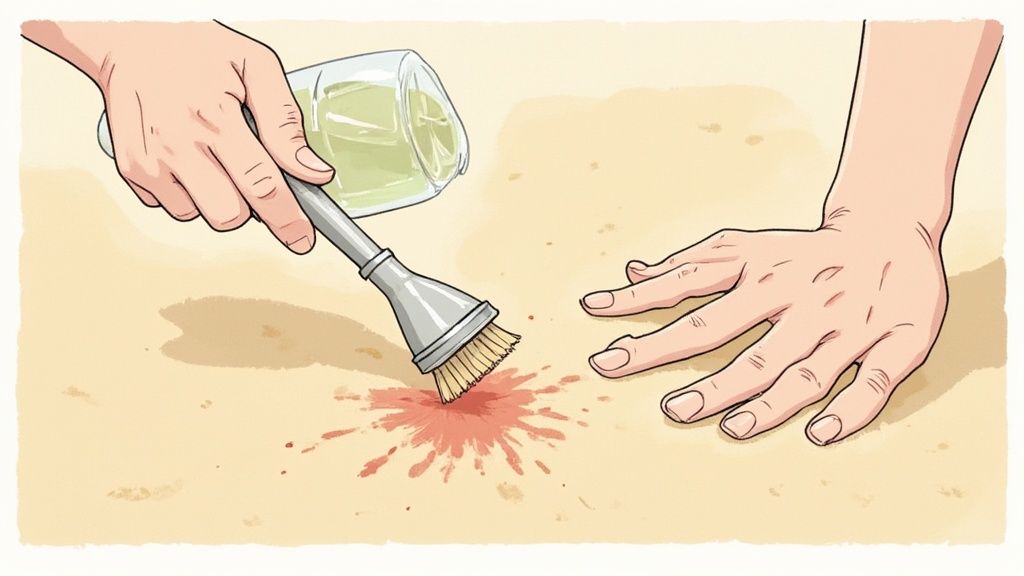
The real secret to keeping a sisal carpet looking fresh for years isn't about intensive deep cleaning. It actually comes down to the small, consistent habits you build into your weekly routine. Gentle, regular care is what truly preserves the natural colour and intricate texture of sisal, preventing the kind of deep-set dirt that needs a more drastic solution.
Think of it like caring for a wooden floor; you wouldn't wait for it to be caked in mud before sweeping. The same idea applies here. Consistent maintenance is far more effective—and safer for the fibres—than occasional, aggressive cleaning, which can often do more harm than good.
The Art of Proper Vacuuming
Your vacuum cleaner is your most important tool, but how you use it matters enormously. The coarse, natural weave of sisal is fantastic at trapping tiny particles of dust, grit, and soil. If you leave them there, these abrasive particles act like sandpaper, slowly grinding away at the fibres every time someone walks across the rug.
To get ahead of this, you need to vacuum your sisal carpet thoroughly and often. A common mistake we see is people vacuuming in only one direction. This just skims the surface, leaving behind the grit that’s settled deep within the weave.
The key is to work in a criss-cross pattern. First, vacuum the entire carpet from north to south. Then, go over it all again from east to west. This simple change of direction helps the suction lift debris from all angles of the weave, giving you a much deeper clean without damaging the delicate fibres.
Establishing Your Vacuuming Schedule
How often you need to vacuum depends entirely on where the carpet is. Not all areas of your home get the same amount of foot traffic, so your cleaning routine should reflect that.
- High-Traffic Zones: For hallways, living rooms, and busy entryways, aim for a good vacuum at least twice a week. This regular attention is crucial for removing daily dirt before it gets ground in.
- Low-Traffic Zones: In bedrooms or formal dining rooms that see less action, a thorough vacuuming once a week is usually more than enough to keep things fresh.
Figuring out the right frequency is a vital part of long-term care. If you need a bit more specific guidance, our article on how often to clean carpets offers detailed advice for different household situations.
Consistent vacuuming is your most powerful proactive strategy. It's been shown that up to 80% of carpet dirt is dry soil that a good quality vacuum can remove. By getting rid of it regularly, you dramatically reduce the wear and tear on your sisal fibres.
Proactive Strategies Beyond Vacuuming
While vacuuming is your main task, a few other simple habits can significantly cut down on the amount of dirt that even reaches your carpet in the first place. These proactive steps are all about stopping dirt at the door and managing general wear over time.
One of the most effective things you can do is place high-quality doormats at every entrance. A good, coarse mat will trap a surprising amount of dirt, dust, and moisture from shoes before they ever touch your beautiful sisal. Encouraging everyone to wipe their feet is a small act that makes a huge difference.
Another brilliant tip for area rugs is to rotate them. Just like rotating the tyres on your car, turning your sisal rug 180 degrees every six months helps it wear evenly. This stops one side from fading in the sun or becoming worn down in a high-traffic path. This simple rotation will visibly extend the life and beauty of your rug, keeping it looking balanced and fresh for much longer.
Handling Spills and Stains on Sisal Carpet
That heart-sinking moment when something spills on your beautiful sisal carpet doesn't have to end in disaster. If you're quick on your feet and know the right moves, you can tackle most household accidents before they leave a lasting mark.
The absolute key is to act fast and resist your first instinct: grabbing a wet cloth to scrub away. For sisal, that's the single worst thing you can do.
Your mantra should always be: act fast, stay dry, and be gentle. Sisal's natural fibres are like a sponge, so your main job is to lift the spill out of the carpet before it soaks in and creates a permanent stain or a dreaded watermark. Scrubbing will only fray the delicate weave and push the stain deeper, causing damage that's impossible to reverse.
Immediate Spill Response: Your First 60 Seconds
When a spill happens, those first few moments are everything. Keeping a small toolkit handy means you can jump into action immediately.
If you’ve dropped something semi-solid like food, mud, or a pet has had an accident, your first job is to gently scrape away any excess. A dull knife, a spoon, or even the edge of a credit card works perfectly. Scrape carefully from the outside edge of the spill inwards to stop it from spreading.
For liquid spills, a clean, dry, white absorbent cloth is your best friend. Press it firmly over the spill to blot up the liquid. Don't rub! Just lift, find a clean, dry spot on the cloth, and press down again. Keep doing this until the cloth comes away dry. You might go through a few cloths, but it’s worth it.
The golden rule is to always blot, never rub. Rubbing not only pushes the liquid deeper into the sisal's absorbent fibres but also damages the weave, creating a fuzzy, worn-looking patch that can be more noticeable than the original stain.
Tackling Common Stains With Sisal-Safe Solutions
Once you've blotted up as much as you can, it's time to treat what's left. The right solution depends entirely on the type of stain. But remember, always use any liquid sparingly—a lightly dampened cloth is all you ever need.
- Coffee, Tea, or Juice: After a thorough blotting, gently dab the area with a cloth dampened with a bit of club soda. The fizz can help lift the stain right out of the fibres.
- Red Wine: The classic carpet nightmare! Blot as much as you can, then cover the stain completely with salt or a sisal-safe dry cleaning powder. Let it sit for a few hours to draw out the wine, then vacuum it all up.
- Pet Urine: Speed is vital. Blot immediately, then use a cloth lightly dampened with a mix of 50% white vinegar and 50% water. The vinegar is brilliant for neutralising the ammonia and the odour. Blot gently, and follow up with a dry cloth to finish.
For tougher, oil-based stains from things like butter or greasy food, a dedicated sisal dry cleaning kit is your best option. These kits come with a special absorbent powder that you sprinkle over the stain. You brush it into the fibres, let it work its magic absorbing the grease, and then simply vacuum it away.
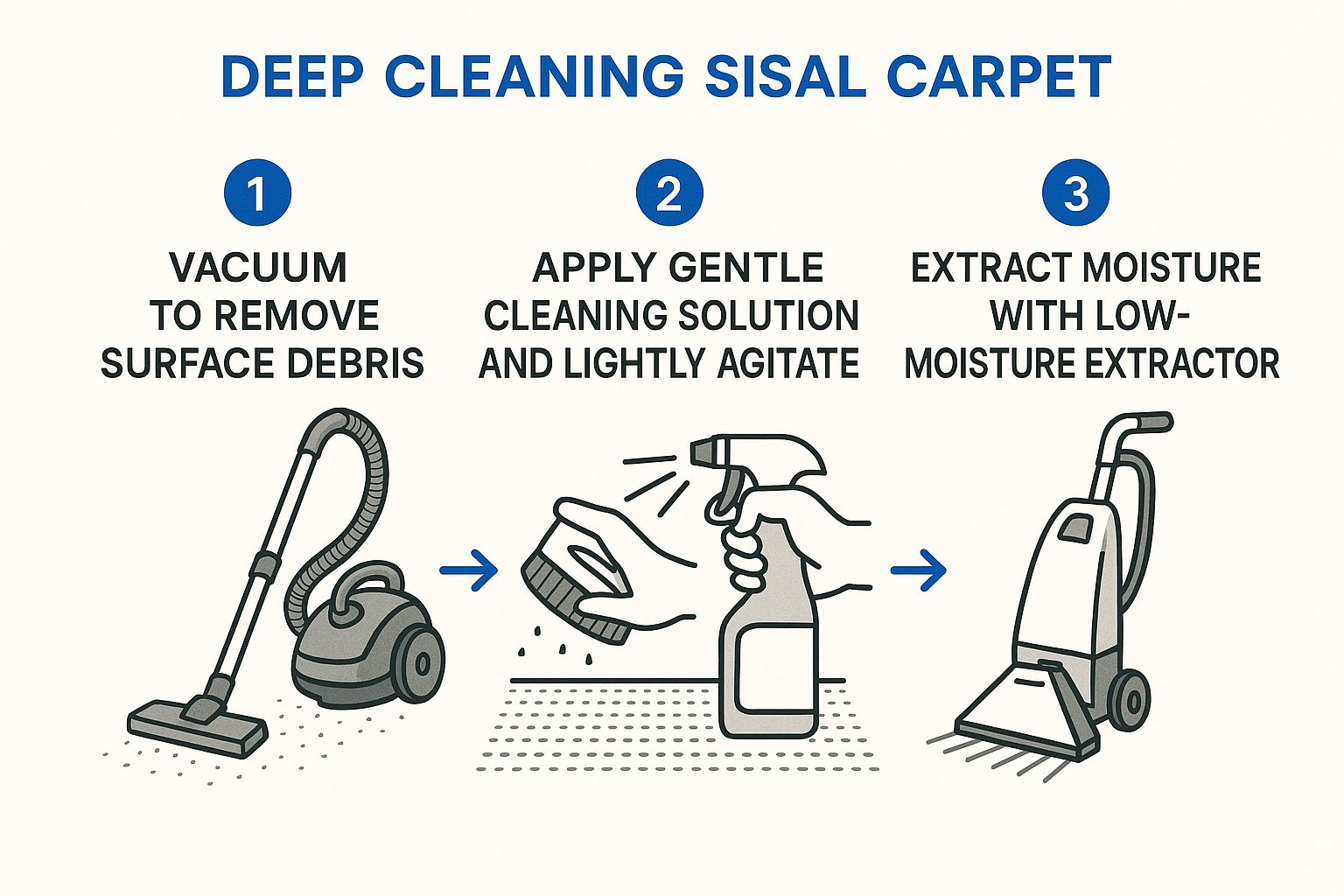
This three-stage process—vacuuming, careful application of a solution, and low-moisture extraction—is crucial for protecting delicate sisal fibres while getting them properly clean.
Common Sisal Stain Treatment Guide
For quick reference, here’s a simple table to help you tackle common spills the right way.
| Stain Type | Immediate Action | Cleaning Solution |
|---|---|---|
| Mud | Let it dry completely, then scrape/vacuum. | Dry brush and vacuum. |
| Coffee/Tea | Blot with a dry white cloth immediately. | Lightly dab with club soda. |
| Red Wine | Blot, then cover with salt. | Let salt sit for several hours, then vacuum. |
| Pet Urine | Blot thoroughly with a dry cloth. | 50/50 white vinegar and water solution. |
| Grease/Oil | Scrape solids, then apply absorbent powder. | Use a dedicated sisal dry cleaning powder. |
Always test any cleaning solution on a small, hidden area of your carpet first to ensure it doesn’t affect the colour.
A Deeper Look at Dry Cleaning Methods
There's a good reason we recommend dry cleaning methods for sisal. It’s all down to the science of how the fibres react to moisture. Dry cleaning powders work through adsorption, a process where the cleaning agent pulls stain particles and moisture onto its own surface, lifting them out of the carpet. This is completely different from wet cleaners, which dissolve the stain but can also carry it deeper into the carpet backing.
This 'dry-first' approach is becoming the industry standard, especially as more homes choose natural flooring. In fact, the UK contract cleaning services market was valued at around £13.5 billion in 2023 and is projected to grow significantly. A big part of this growth comes from the demand for specialised care for materials like sisal, which need expert techniques to stay looking their best.
While we focus on sisal here, knowing some general effective carpet stain removal techniques can be helpful. Just remember to always test any product on an out-of-the-way spot first.
After any spot treatment, even a minor one, it’s smart to use a hairdryer on its coolest setting to dry the area completely. Work from the outside of the damp patch inwards to stop a ring from forming. If a stubborn mark just won’t budge with these gentle methods, our guide on how to remove stubborn carpet stains has more advanced tips to help.
When to Hire a Professional Sisal Cleaner
While you can handle most day-to-day upkeep with regular vacuuming and quick spot treatments, there are times when you need to step back. Knowing when a problem is bigger than your DIY skills is the key to protecting your investment. If you try to tackle a major issue without the right gear, you can easily cause permanent damage like water rings, browning, or even ruin the fibres for good.
Sometimes, the smartest move you can make for your sisal carpet is to call in a certified professional. They have specialised, low-moisture cleaning techniques and commercial-grade equipment that you just can't get for home use. Making that call at the right time can save you a lot of money and frustration down the line.
Scenarios That Demand Expert Help
Some cleaning challenges are just too risky to handle yourself. If you’re dealing with any of these situations, it’s a clear sign you need to bring in a professional.
- Widespread Soiling: If your carpet has a general layer of grime built up over a large area, spot cleaning just won’t cut it. A professional can give it a full, even clean without leaving patchy marks.
- Significant Water Damage: A big leak or flood is a true emergency for sisal. Experts use powerful, controlled-moisture tools to safely dry the carpet, preventing mould and permanent water stains.
- Stubborn, Set-In Stains: Old stains that have had time to bond with the natural fibres are incredibly tough to shift. A pro has an arsenal of specialised solvents to break them down without harming the carpet’s structure.
- Persistent Odours: Lingering smells from pets or mildew that just won't go away often mean the problem is deep in the fibres or backing. Experts can deep clean and properly neutralise these odours at the source.
Professional cleaners often use a technique known as dry-host extraction cleaning. This method uses absorbent, sponge-like particles that are worked into the carpet to attract and trap dirt. Everything is then vacuumed away, lifting the grime with almost no moisture, making it one of the safest and most effective methods for sisal.
Finding the Right Professional for the Job
Not all carpet cleaners are the same, and hiring someone without direct sisal experience is a huge risk. The UK cleaning industry is growing fast, with an economic contribution hitting £59.8 billion in 2023, showing a real demand for specialised services. To find a true expert in this market, you have to ask the right questions.
Knowing when to call for help is just as crucial as knowing how to clean. The principles for finding and entrusting a professional with specialized cleaning tasks are the same, whether for pet grooming or plant-fibre carpets. Before you hire anyone, make sure you ask these questions to ensure they are qualified to handle your delicate sisal.
Questions to Ask a Potential Cleaner
- Do you have specific experience with cleaning sisal carpets? This has to be your first question. You’re looking for a confident ‘yes’ and some examples of their work.
- What cleaning method do you use for natural fibres? If they say "steam cleaning" or "hot water extraction," it’s a red flag. The right answer will involve dry cleaning, low-moisture extraction, or dry-host methods.
- Are you insured? Any reputable company will have full insurance to cover any accidental damage. Don't be afraid to ask for proof.
- Can you provide references or show examples of previous work on sisal? An experienced specialist will be happy to share their success stories.
By taking a few moments to properly vet your cleaner, you can rest easy knowing your beautiful sisal carpet is getting the expert care it needs. For a complete look at what to expect, have a read through our guide on the professional carpet cleaning process.
Common Sisal Carpet Cleaning Questions Answered
Even with the most careful maintenance routine, you’re bound to run into questions when looking after a natural fibre like sisal. Its unique properties can feel a bit intimidating, but once you have clear answers to the most common problems, you'll feel much more confident.
We've pulled together the queries we get all the time from sisal owners. This isn't just theory; it's practical advice based on real-world situations to help you protect your investment and keep it looking fantastic.
Can I Use a Steam Cleaner on My Sisal Carpet?
This is probably the most important question we hear, and the answer is a firm and absolute no. Steam cleaning or using any kind of wet shampoo method on sisal is a surefire way to ruin it.
The intense moisture and heat from a steam cleaner will completely saturate the super-absorbent plant fibres. When this happens, a few things are almost guaranteed to go wrong:
- Permanent Water Stains: As the carpet dries, minerals from the water and natural tannins from the fibres get pulled to the surface, leaving behind dark, ugly rings.
- Browning or Discolouration: All that water can cause the natural fibres to turn a murky brown, permanently changing the carpet’s colour.
- Shrinking and Warping: The fibres swell up when wet and then shrink as they dry out, which can cause the whole carpet to buckle, ripple, or warp out of shape.
For the best results, always, always stick to dry cleaning methods or spot treatments that use the absolute minimum amount of moisture.
What Should I Do If My Sisal Carpet Gets a Water Stain?
It’s one of the great ironies of sisal care that water itself is one of its worst enemies. If you see a water spill happen, your first move is to blot the area immediately with a clean, dry cloth to soak up as much liquid as you can.
After blotting, grab a hairdryer on its cool or low-heat setting. Dry the damp patch thoroughly, working from the outside edge of the spill inwards. This little trick helps prevent a dark ring from forming as it dries.
If you’re dealing with a watermark that’s already set in, things get more complicated. Honestly, for older water stains, calling a professional is your safest bet to avoid making it worse.
Are There Pet-Friendly Cleaning Solutions for Sisal Rugs?
Yes, but you have to be incredibly selective. When it comes to pet urine, speed is everything. You need to act fast before the acid in the urine permanently damages the sisal fibres.
First, blot up as much of the liquid as possible using a dry, absorbent cloth. Next, you can gently blot the spot with a simple solution of one part white vinegar to one part water. Vinegar is fantastic for neutralising that strong ammonia smell.
Expert Tip: After blotting with the vinegar solution, cover the area with a generous pile of baking soda. Leave it to sit until it's completely dry (this might take a few hours) to draw out any leftover moisture and odour, then just vacuum it all up.
Avoid commercial enzyme cleaners unless the label specifically says they are safe for natural fibres like sisal. Most are water-based and will do more harm than good. The demand for specialised cleaning is growing. In fact, the UK cleaning services market is expected to hit about USD 30.1 billion by 2030. A survey after the pandemic found that 82% of UK respondents were more conscious of cleanliness, which has boosted the need for experts who can handle delicate materials. You can find more on this growing market over at Grand View Research.
At AG Carpet Specialists, we understand the unique challenges that come with natural fibre carpets. If you're dealing with a stubborn stain or your sisal just needs a professional deep clean, contact us today for a free quotation.