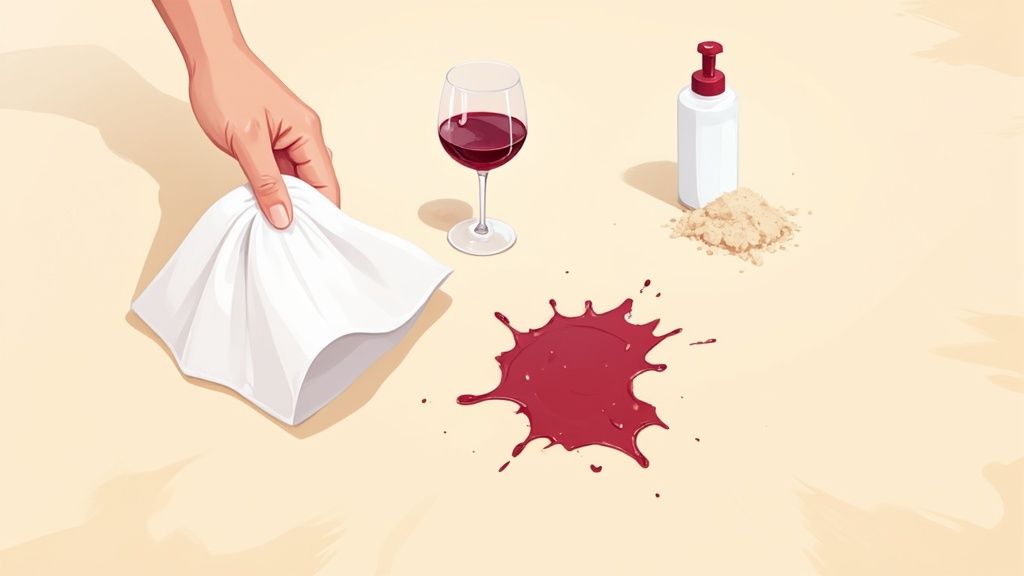
When it comes to a red wine carpet stain, speed is everything. The moment that glass tips, you’re on the clock. Your main goal is to get as much of that wine out of the carpet fibres as possible before it decides to move in permanently.
The absolute worst thing you can do is start scrubbing. I know it’s tempting, but rubbing a fresh spill only grinds the wine deeper into the carpet and makes the stain bigger. Gentle blotting is the way to go.
Your First Five Minutes After a Spill
We’ve all been there—that heart-sinking moment a glass of red goes tumbling onto a light-coloured carpet. But panicking is the last thing you should do. Those first few minutes are absolutely critical in stopping a spill from becoming a permanent mark. Red wine is packed with natural dyes called chromogens and tannins, and they get to work bonding with carpet fibres almost immediately. A quick, calm reaction is your best defence.
Forget any old wives' tales about pouring white wine on it. The most effective first move is always a gentle blot.
The Blotting Technique
Grab a clean, dry, white cloth—white is best so you can actually see the wine being lifted out. Start blotting from the outside of the stain and work your way in. This little trick stops you from accidentally spreading the stain even further.
As one part of the cloth gets soaked with wine, just move to a fresh, dry section. Keep doing this until you can’t see any more wine transferring from the carpet to your cloth.
Key Takeaway: Remember, blotting lifts the wine out of the carpet. Scrubbing just forces the pigment deeper into the fibres, which will make your job ten times harder.
Dilute with Cold Water
Once you've blotted up as much of the initial spill as you can, it's time for the next step. Lightly dampen a new, clean cloth with a bit of cold water and continue to blot the area. The cold water helps to dilute what's left of the wine, making it easier to lift out.
Whatever you do, don’t use hot or even warm water. Heat can actually cause a chemical reaction that sets the stain permanently, almost like a dye.
This infographic breaks down those crucial first steps.
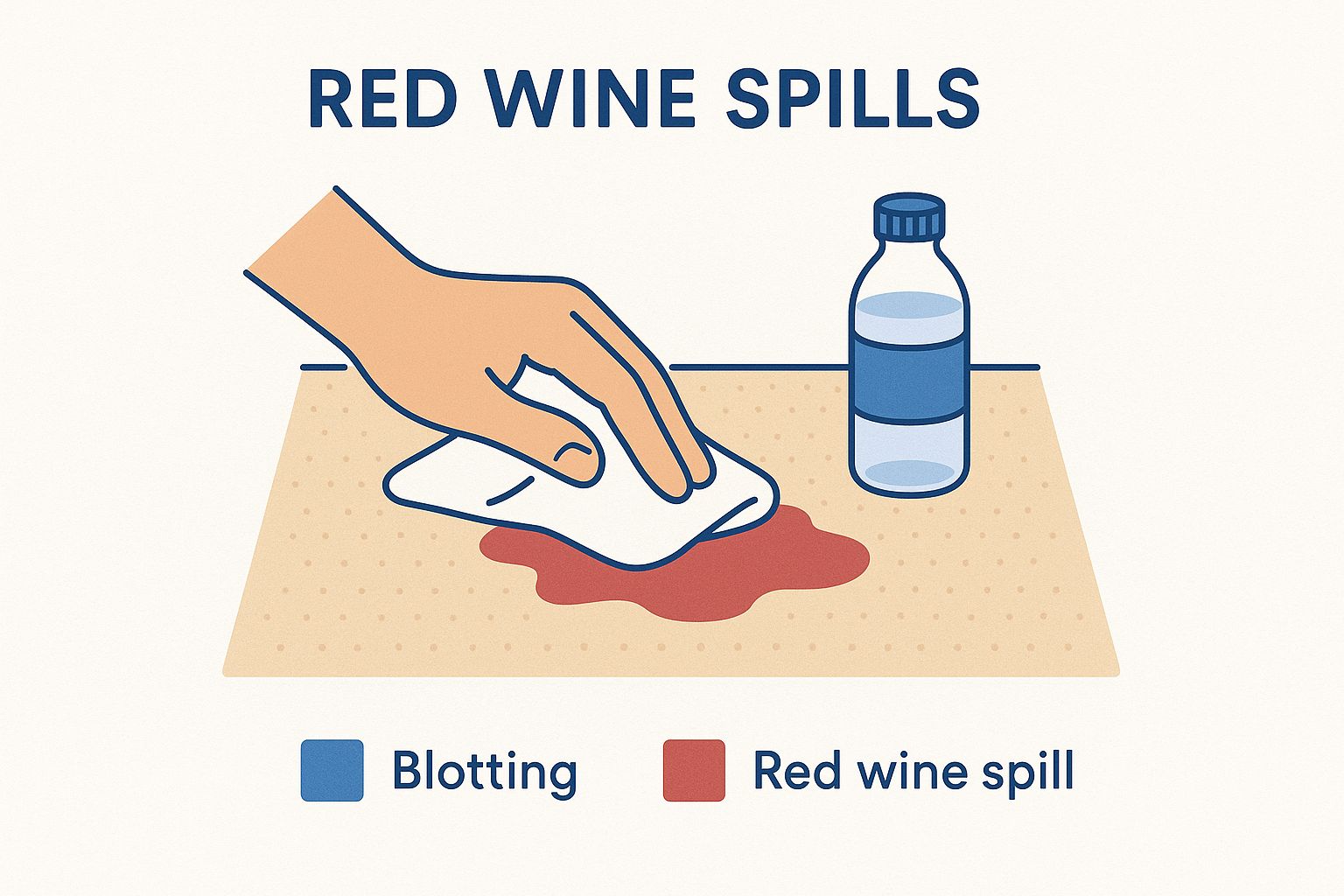
As you can see, a calm, methodical approach is what works best: blot first, then dilute.
With red wine making up around 44% of all wine drunk in the UK, these spills are a pretty common problem in homes up and down the country. In fact, UK carpet care experts agree that homeowners who act within the first five minutes have up to a 70% higher chance of getting the stain out completely on their own. For more professional advice, you can find great carpet cleaning insights on CarpetBright.uk.com.
Choosing Your DIY Stain Removal Solution
Once you’ve blotted the initial spill, your next move is choosing the right cleaning solution. It's a crucial step because not all carpets are created equal. What works a treat on a hard-wearing synthetic carpet could be a disaster for delicate natural wool fibres. Often, the best choice simply comes down to what you already have in your cupboards.
Let’s take a look at a few tried-and-tested DIY methods that are staples in UK homes. Each one tackles the problem slightly differently, working to break down the tannins and pigments that make red wine stains so notoriously stubborn.
Common Household Solutions
Most of us will have the ingredients for at least one of these effective remedies. Think of them as your first line of defence before you rush out to buy a specialist product.
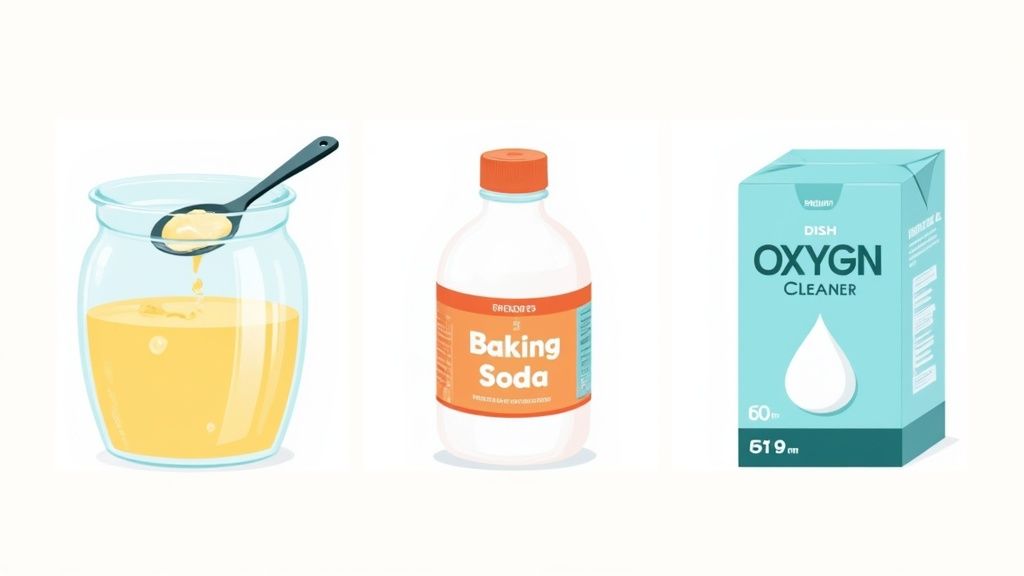
- White Vinegar & Bicarbonate of Soda: This classic duo is a firm favourite for a reason. When mixed, they create a gentle fizzing action. The vinegar, being an acid, gets to work breaking down the pigments in the wine. The bicarb then acts as a mild abrasive, helping to lift the stain right out of the carpet fibres.
- Hydrogen Peroxide & Washing-Up Liquid: This combination packs a bit more of a punch. Hydrogen peroxide is an oxidising agent, which means it chemically breaks the bonds of the colour molecules in the wine stain. Just a tiny drop of washing-up liquid helps to tackle any greasy component and lift the loosened particles away.
A Quick Word of Warning: Hydrogen peroxide has mild bleaching properties. While it's generally safe for light-coloured synthetic carpets, you must spot-test it in an unseen area first—perhaps under a sofa or in a corner. Never use it on dark or vibrantly coloured carpets without testing, and be exceptionally cautious with wool.
DIY Red Wine Stain Remover Comparison
To help you decide, here’s a quick rundown of these household heroes. Consider your carpet type carefully before you dive in.
| Method | Best For | Pros | Cons / Cautions |
|---|---|---|---|
| Vinegar & Bicarb | Natural fibres like wool; delicate carpets. | Very gentle and safe for most carpet types. Ingredients are cheap and commonly available. | Can take longer to work and might require a second application on tougher stains. |
| Hydrogen Peroxide & Soap | Light-coloured synthetic carpets (nylon, polyester). | Highly effective and often works quickly on fresh stains. | Risk of bleaching or colour loss. Must be spot-tested. Not recommended for dark or wool carpets. |
| Salt (as a first response) | Fresh, wet spills on any carpet type. | Excellent at drawing out moisture and wine pigment immediately after a spill. | Not a complete cleaning solution; it's a pre-treatment that must be followed up. |
Ultimately, your carpet's material is the deciding factor.
For those with delicate wool carpets, the milder vinegar and bicarb paste is always the safer bet. Its gentle action is far less likely to cause permanent damage or discolouration. On the other hand, for most synthetic carpets, the hydrogen peroxide mix often delivers faster and more dramatic results, but it does come with that slightly higher risk. If you're keen on exploring more gentle, plant-based options, our guide on creating a natural carpet cleaner has some fantastic tips.
And what if you have a commercial, oxygen-based cleaner already under the sink? That’s often a brilliant choice. These products are specifically designed to be colour-safe and effective, working in a similar way to hydrogen peroxide by releasing oxygen to obliterate the stain. Just be sure to follow the product's instructions to the letter.
Your Guide to Lifting that Red Wine Stain
So, you've mixed up your cleaning solution and you’re ready to go. This is where your technique really matters. Honestly, how you apply the cleaner is just as crucial as the solution itself. If you rush this part, you could end up with a faded patch or, even worse, a sticky residue that just attracts more dirt down the line.
Before you go anywhere near the main stain, always do a spot test. Find a discreet bit of carpet – maybe inside a wardrobe or under the sofa – and dab on a small amount of your cleaner. Give it a few minutes. You're just checking to make sure it doesn't cause any colour bleed or damage to the fibres.
Getting the Solution on the Stain
Once you’re happy the carpet is safe, it’s time to tackle the stain. Gently apply your cleaning mixture directly onto the red wine mark. The key here is not to oversaturate it. You only need enough to cover the stained area without soaking right through to the carpet backing.
Now, let the solution sit for at least five to ten minutes. This gives it time to get to work, breaking down the wine's pigments and tannins that have latched onto your carpet fibres. You might even start to see the stain fading right before your eyes.
Pro Tip: Always use a clean, white cloth for this job. It’s the easiest way to see the red wine lifting out of the carpet and onto the cloth, so you know your hard work is paying off.
Blotting it Up and Rinsing Clean
After letting the solution work its magic, grab a fresh, clean cloth and start blotting. Always work from the outside edges of the stain inward to stop it from spreading. You should see the stain transferring to your cloth. Keep blotting, using clean sections of the cloth, until no more colour comes away.
Red wine stains are notorious in UK homes, mainly because their tannins bond chemically to carpet fibres. The National Carpet Cleaners Association (NCCA) always stresses that acting fast with cold water is vital. Cold water helps dissolve the tannins far better than hot water, which can actually set the stain for good.
Finally, you need to rinse. Lightly dampen another clean cloth with cold water and blot the area to remove any leftover cleaning solution. This is a crucial step to avoid that dreaded sticky patch. Finish by blotting with a dry towel to soak up as much moisture as possible, then just let it air dry completely.
For more detailed guides, check out these expert tips on how to remove wine stains from carpet. And if you're dealing with other difficult marks, take a look at our advice on how to remove stubborn carpet stains.
How to Tackle Old and Dried Wine Stains
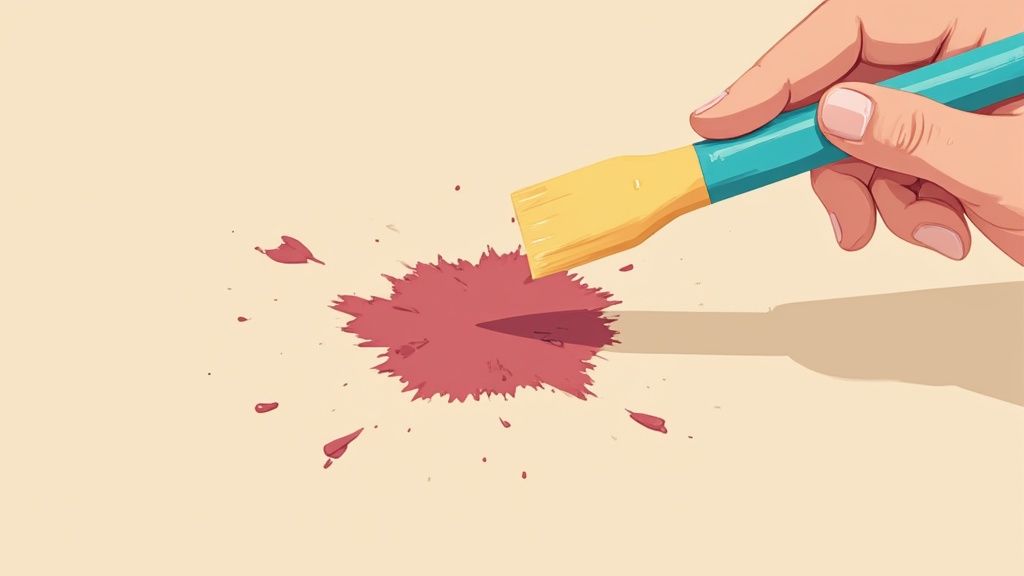
Waking up to discover a red wine stain from the night before presents a completely different challenge. When a stain has dried, the wine's pigments have had hours to bond with the carpet fibres, almost like a dye. But don't lose hope just yet. It takes more patience, but it’s far from an impossible task.
Before you can treat a stain that's become a solid part of the fibres, you first need to rehydrate it.
Rehydrating and Pre-Soaking
Start by gently dampening the old stain using a cloth soaked in cool water. Try not to oversaturate the carpet, as this can cause any loosened pigments to spread. The aim is just to make the stain workable again.
Once it's damp, a pre-soak solution can work wonders. A simple mixture of cool water and an oxygen-based cleaner is a great choice. Let this sit for at least 30 minutes, giving the solution plenty of time to get deep into the fibres and start breaking down those stubborn, bonded pigments.
Remember, treating a dried stain is a marathon, not a sprint. Rushing the process or scrubbing aggressively will only cause damage. Patience is your most valuable tool.
Using Stronger Cleaning Solutions
After the pre-soak, it's time for a more intensive treatment. Oxygen-based cleaners are brilliant for old stains because they release tiny oxygen bubbles that safely break apart the colour molecules without bleaching most types of carpet.
Apply the cleaner following the product's instructions, blot gently with a clean white cloth, and repeat the process. You'll likely need to do this several times. In fact, dried red wine spills are a major reason for professional call-outs in the UK—insights from Good Housekeeping UK show they make up around 18% of all professional jobs. This just goes to show how persistent they can be.
If the stain is still visible after a few attempts, it’s best to stop. Applying more and more chemicals risks causing permanent damage to the carpet's colour and texture. At this stage, it’s probably time to call in a professional. Knowing how to deep clean carpets at home helps you recognise when a DIY job has reached its limit.
Looking After Your Carpet Post-Stain and Preventing Future Spills
Getting a red wine stain out of your carpet is a fantastic feeling, but the job isn't quite over. Proper aftercare is key to making sure a faint mark doesn't reappear later on, or worse, leaving a sticky residue that just attracts more dirt.
Once you’re happy the stain has completely vanished, the final task is to give the area a gentle rinse.
Take a clean, white cloth, dampen it slightly with cool water, and carefully blot the spot. This will lift any leftover cleaning solution from the fibres. Follow this up with a dry towel, pressing down firmly to soak up as much moisture as you can. To get it dry faster and stop any musty smells or mould from developing, it’s a good idea to aim a fan at the damp patch for a couple of hours.
Stopping the Next Disaster Before It Happens
After the carpet is totally dry, you might notice the pile looks a bit flattened or matted where you’ve been working. Don’t worry, this is easy to fix. Just run the hoover over the spot or gently fluff the fibres up with your fingers. This little touch helps the cleaned area blend back in perfectly with the rest of the carpet.
A Proactive Approach: The best defence is a good offence. Don't wait for the next spill to send you into a panic. I always advise my clients to put together a small, dedicated stain removal kit. Just a few clean cloths, a spray bottle of water, and your preferred cleaner, all in one place, means you can tackle accidents the second they happen.
For a more permanent solution, think about treating your carpet with a professional-grade spray. Taking a moment to understand the benefits of a stain protector for your carpet can save you a world of stress. These products create an invisible barrier that gives you precious time to clean up spills before they have a chance to set.
Common Questions About Red Wine Stains
It's completely normal to have questions when you're faced with that dreaded red wine spill. Getting the right advice is often the difference between a clean carpet and a permanent reminder of last night's party, so let’s clear up a few common queries.
Is the Salt Trick a Myth?
So many people ask if the popular salt trick actually works. While you’ve probably seen it all over the internet, most carpet experts here in the UK will tell you to steer clear. Salt might absorb a bit of the wine, but it does absolutely nothing for the tannins that cause the deep red stain.
Even worse, the sharp salt crystals can be quite abrasive, potentially damaging delicate carpet fibres. Any residue left behind can also attract moisture, leading to much bigger problems down the road.
How Should I Clean Different Carpet Types?
Another frequent question is how to handle red wine on a wool carpet. Wool is a natural fibre, making it far more delicate than synthetic materials. It can be easily damaged by harsh chemicals like ammonia or strong hydrogen peroxide solutions.
The safest approach is a gentle mix of cool water and a small amount of white vinegar.
Always test your cleaning solution on a small, hidden patch of carpet first. If a gentle attempt doesn't lift the stain, it's best to stop right there to avoid causing irreversible damage to the natural fibres.
When Is It Time to Call a Professional?
Knowing when to step back and call in an expert is crucial. If you've tried a suitable home remedy twice and the stain is still there, it's time to bring in a professional.
Continuing to scrub or trying different products can permanently set the stain or, even worse, bleach your carpet. Professional technicians have access to specialised treatments and equipment that can often succeed where home remedies fail. To get a better idea of what the experts do, you can learn more about the professional carpet cleaning process.
If a stubborn red wine stain has defeated your best efforts, don't risk damaging your carpet. The team at AG Carpet Specialists has the professional-grade equipment and expertise to restore it safely. Contact us today for a free, no-obligation quotation!