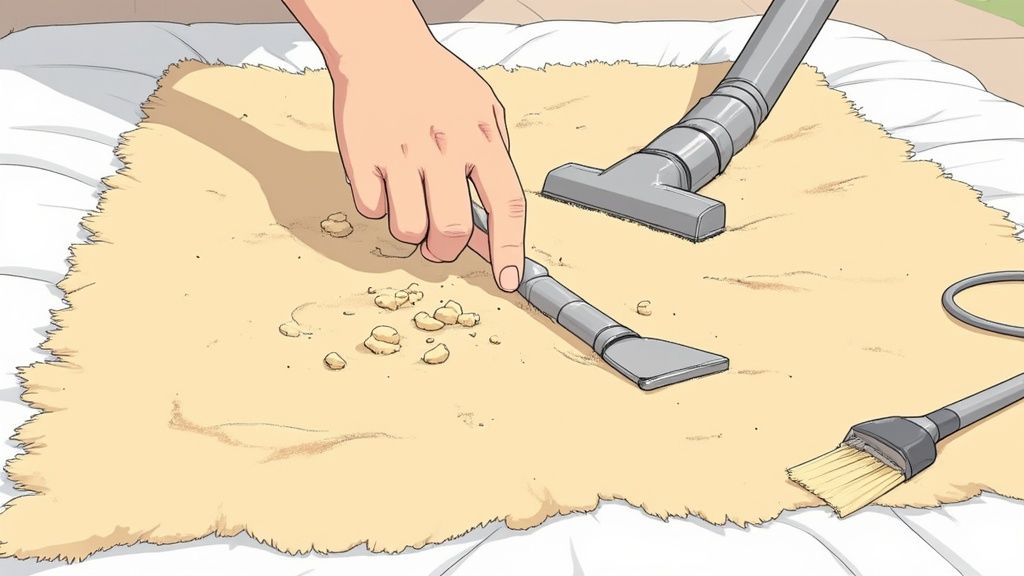
If you're used to cleaning standard synthetic carpets, you need to forget everything you know before tackling a sisal rug. The golden rule is a dry-first, minimal-moisture approach. Using conventional wet cleaning methods on these natural fibres is a recipe for disaster, often leading to permanent water stains or browning.
Why Sisal Rugs Need a Different Cleaning Approach
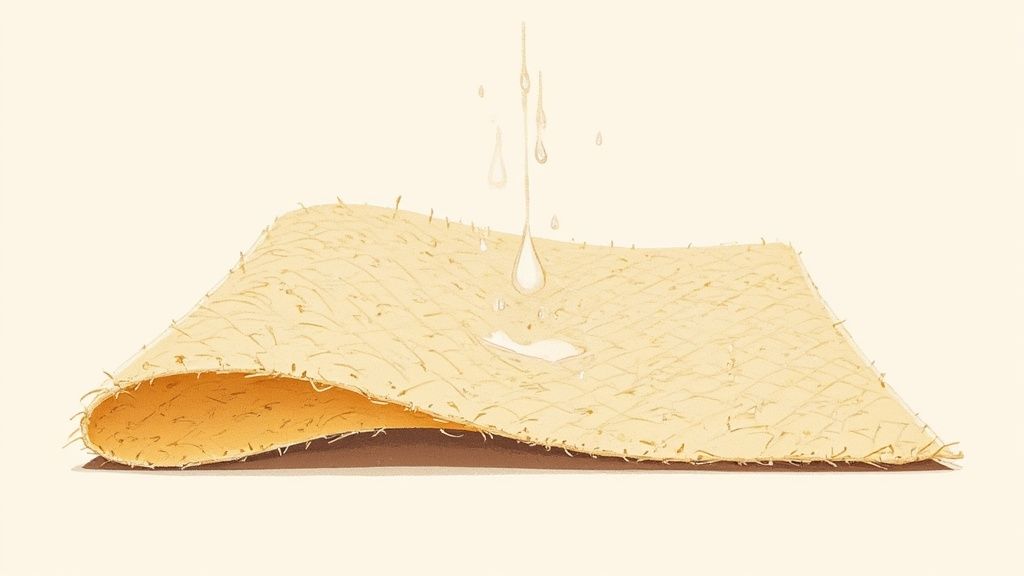
Before you even think about grabbing a damp cloth to deal with a spill, it’s crucial to understand what makes sisal so different. It comes from the Agave plant, and its natural fibres act like a sponge. This high absorbency is precisely what makes it so tricky to clean.
When sisal gets wet, a few things can go wrong. The fibres might swell up and then shrink as they dry, causing the rug to warp or pucker and ruining its flat, neat appearance. More often than not, the moisture will release tannins—natural oils within the plant fibres—that rise to the surface and leave behind ugly brown or yellowish rings. We call this 'browning'.
The Problem with Water
Simply put, water is not your friend when cleaning a sisal rug. It helps to think of the fibre like a delicate piece of wood rather than a synthetic fabric. You'd never soak a wooden floor to clean it, and the same logic applies here. This is why a "dry-first" mindset is absolutely non-negotiable for proper care.
This is more relevant than ever, as sisal's popularity continues to grow. In the UK, sisal rugs are a fast-growing part of the area rug market, thanks to a huge consumer interest in sustainable, natural home decor. Because the coarse texture demands such specific care, knowing how to handle it is key to protecting your investment. For more on UK market trends for natural rugs, it's worth exploring insights from Grand View Research.
Adopting the Right Mindset
To look after your rug properly, you have to completely shift your cleaning instincts. Instead of reaching for a spray bottle and cloth, your first reaction to any spill should be to blot, scrape, and absorb. This dry, proactive approach is what stops a minor mishap from becoming a permanent stain.
Here are the core principles of good sisal care:
- Speed is Essential: You must get to spills immediately before they have a chance to soak deep into the fibres.
- Blot, Don't Rub: Rubbing a spill will only grind it deeper into the weave and can fray the fibres themselves.
- Embrace Dry Methods: Absorbent powders, blunt scraping tools, and a suction-only vacuum should be your go-to toolkit.
- Use Liquid Sparingly: If a liquid cleaner is absolutely necessary, use the smallest amount possible and dry it immediately.
The golden rule for sisal care is simple: treat every spill as if water is the enemy. Your goal is to remove the substance with as little moisture as possible, preserving the fibre's integrity and colour.
For those bigger or more stubborn stains where a completely dry method just won't cut it, you'll likely need professional help. You can learn more about these specialised techniques in our guide to professional rug dry cleaning, which explains how we experts handle delicate fibres without causing damage.
Assembling Your Sisal Cleaning Toolkit
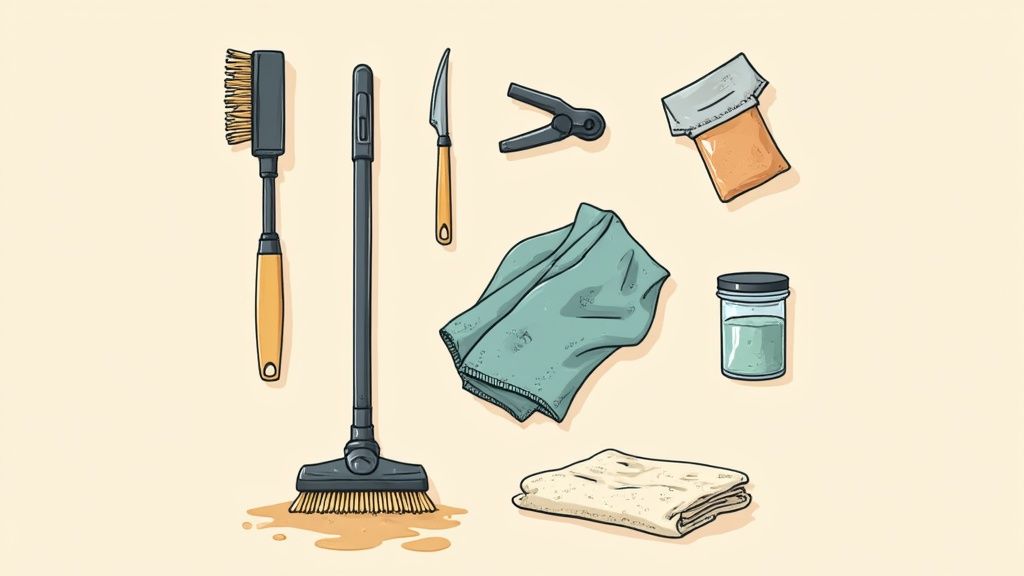
When an accident happens on a sisal rug, your greatest ally is speed. Having the right supplies ready to go means you can act immediately, which is often the difference between a minor cleanup and a permanent stain.
You don't need a huge, specialised kit, either. A few simple household items are all it takes to build an effective arsenal for cleaning a sisal rug. Think of it as a first-aid kit for your flooring—a small, organised box you can grab the moment a spill happens.
Your Sisal Rug Cleaning Toolkit
To be truly prepared, it's wise to have a few key items on hand. I've put together a quick checklist of the essentials you'll need for everything from routine upkeep to tackling those heart-stopping spills.
| Tool or Material | Primary Use | Important Note |
|---|---|---|
| Vacuum (Suction-Only) | Regular maintenance and removing dry debris. | Crucially, disable the beater bar to avoid fraying the delicate sisal weave. Use an upholstery attachment. |
| Blunt Scraper | Lifting solid messes like mud or dropped food. | A dull knife or even the edge of a spoon works perfectly without snagging the fibres. |
| Soft-Bristled Brush | Gently working in dry powders or loosening dried soil. | Natural bristles are best as they are less abrasive on the rug's surface. |
| Dry Absorbent Powder | Soaking up liquid spills immediately. | Cornstarch, baking soda, or even plain salt are excellent, inexpensive options. |
| Clean, White Cloths | Blotting liquid spills and applying solvents. | Always use white cloths to prevent dye from a coloured towel transferring onto the rug. |
| Dry Cleaning Solvent | Tackling oily or greasy stains. | Choose a solvent designed for natural fibres and always spot-test on a hidden area first. |
Having these items stored together in a small box or basket means you're never scrambling while a stain sets in.
Why Dry Methods Come First
Your first line of defence should always be a dry one. Moisture is the ultimate enemy of sisal, so tools that absorb and lift without adding liquid are non-negotiable.
Your vacuum, used with suction-only, is your most important tool. That rotating beater bar is designed to agitate synthetic carpets and will absolutely shred the tight, natural weave of a sisal rug. Stick to a simple upholstery attachment.
For anything solid, like a clump of mud or a bit of food, reach for a blunt scraper. A dull knife or a spoon can lift the mess away without damaging the fibres underneath. A soft-bristled brush is also handy for gently working in dry cleaning powders or agitating a dried spot without being too harsh.
Dealing with Liquid Spills
For liquids, your job is to pull as much moisture out as you can, as quickly as you can. This is where dry absorbents are worth their weight in gold.
The most effective response to a liquid spill on sisal isn't about adding a cleaner; it's about subtracting the liquid as quickly and completely as possible. An absorbent powder acts like a sponge, drawing the spill out of the fibres before it can set.
Sprinkle a dry absorbent powder like cornstarch or baking soda generously over the spill to soak it up. Then, use clean, white cloths to blot—never rub!—the area. For stubborn oily stains, a high-quality dry cleaning solvent is a lifesaver, but always test it on an inconspicuous corner first.
If you prefer to keep your toolkit completely green, there are many effective options. You can learn more by exploring our guide to eco-friendly carpet cleaning products, which details natural alternatives that are both safe and powerful.
Mastering Routine Sisal Rug Maintenance
The real secret to keeping a sisal rug looking fantastic for years isn't some miracle cleaning solution; it's consistent, preventative care. A little bit of smart, regular upkeep stops dirt from getting ground deep into the natural fibres, which is what really causes that dull, tired look over time. We're not talking about back-breaking work here, just a simple routine.
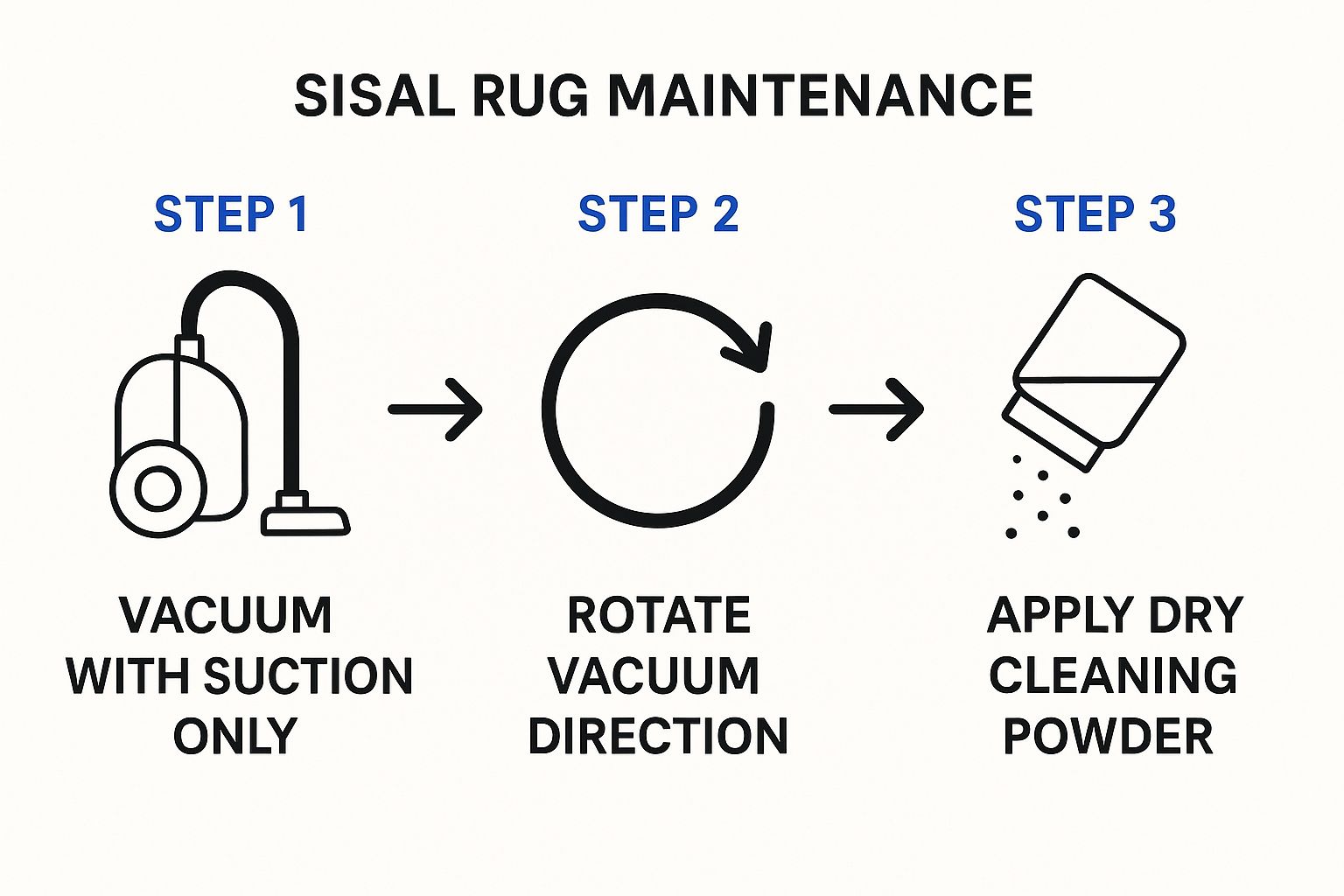
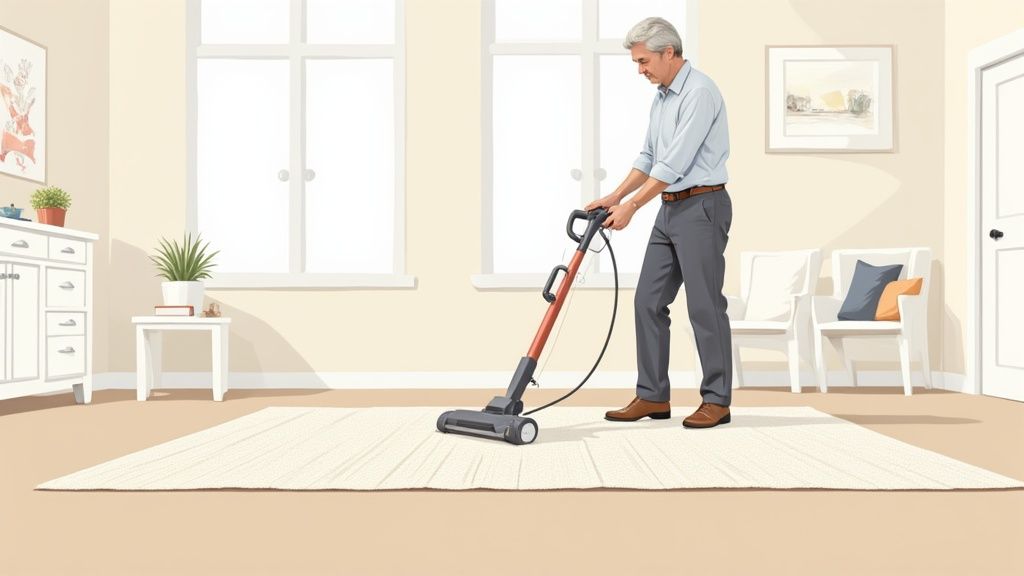
At the heart of it all is vacuuming, but how you do it is everything. You absolutely must use a suction attachment only. Make sure the beater bar or rotating brush on your vacuum is completely switched off. Those aggressive brushes are a disaster for natural fibres—they'll snag, fray, and slowly tear apart the delicate sisal weave, causing damage you just can't undo.
The Right Way to Vacuum
For the best results, get the vacuum out at least once a week. If the rug is in a busy spot like a hallway or the main living room, you’ll want to do it more often. The trick is to change things up.
Don't just run the vacuum over it in one direction and call it a day. Go over the entire rug from north to south, and then do it all again from east to west. This simple criss-cross pattern is incredibly good at pulling up the fine grit and dust that gets lodged deep inside that tight weave. You'd be amazed how much debris a single-direction pass leaves behind.
So many people make the mistake of vacuuming their sisal rug with the same brute force they use on a synthetic carpet. The right approach is gentle yet thorough—just pure suction, worked in multiple directions to protect the fibres while getting the dirt out.
The Power of a Good Old-Fashioned Beating
Sometimes, even the best vacuum can't shake loose the most stubborn, embedded dust. When that happens, it’s time to turn to a classic method that still works wonders: taking the rug outside for a good beating.
On a dry, low-humidity day, drape your rug over a sturdy clothesline, fence, or railing. Using a dedicated rug beater or even the flat side of a broom, give the back of the rug a series of firm whacks. The cloud of fine dust that erupts is always shocking—it’s full of tiny particles a vacuum just can't reach. This process does a fantastic job of reviving the rug's natural colour and texture.
A Deep Refresh with Dry Cleaning Powder
If you're looking for a deeper clean without introducing any risky moisture, a dry cleaning powder is an excellent choice. This is a particularly useful trick in the UK, where our damp air can make trapped dirt feel almost compacted into the rug.
Here’s how to get it done right:
- Scatter the Powder: Sprinkle a dry cleaning powder or compound that’s safe for natural fibres lightly across the whole rug.
- Work It In: Grab a soft-bristled brush and gently work the powder into the weave. You're not scrubbing, just giving it a light agitation to help it get down into the fibres.
- Let It Sit: Leave the powder to do its thing for at least an hour. This "dwell time" is when the granules get to work, absorbing oils and breaking their bond with the dirt.
- Vacuum It Up: Give the rug a meticulous vacuum, using that criss-cross pattern again, to pull up every last bit of the powder along with all the grime it has captured.
This technique is brilliant for brightening up your rug’s appearance and neutralising any lingering odours, all without a single drop of water. In fact, UK home maintenance surveys show that while 68% of owners stick to regular dry vacuuming, only 24% bring in professional dry-cleaning services each year, showing a clear preference for these moisture-free DIY methods. You can see more about these trends in the European carpet market report.
How to Tackle Spills and Stains Immediately
https://www.youtube.com/embed/SHuMSPCJF70
The moment something spills on your beautiful sisal rug, the clock starts ticking. What you do in those first few seconds is genuinely the most crucial part of cleaning a sisal rug. It can be the difference between a minor clean-up and a permanent, ugly stain.
If you remember one thing, let it be this: act fast and stay dry.
Your gut reaction might be to reach for a wet cloth, but please, resist the urge. Moisture is the absolute enemy of natural sisal fibres. Your first job is simply to get as much of the spill off the rug as possible before it has a chance to soak in. How you do this depends entirely on what you’ve just dropped.
Handling Solid or Thick Spills
If you’ve dropped something with substance—think mud, jam, or a dollop of ketchup—your first move is to scrape, not wipe. Wiping will only smear the mess across the surface, grinding it deeper into the rug’s intricate weave and making the problem ten times worse.
Quickly grab a blunt, flat-edged tool. A dull knife, the side of a spoon, or even an old credit card from your wallet will do the trick. Work from the outside edge of the spill inward, gently lifting the solid gunk off the rug. This inward motion is key to stopping the stain from spreading. Once you've scraped off all the excess, you can deal with what's left behind.
The Immediate Response to Liquid Spills
For liquid spills like coffee, tea, or the dreaded red wine, your one and only job is to blot. Never, ever rub a liquid spill on sisal. Rubbing doesn't just force the liquid deeper into the fibres; it can also fray them, creating a permanent fuzzy patch that looks worn and damaged.
Grab a clean, dry, white cloth (so you don't transfer any dye onto the rug) and press it firmly onto the spill. Lift it, find a clean, dry section of the cloth, and press again. Keep doing this until your cloth comes away dry.
The most critical takeaway for any spill is containment and removal. For solids, you lift them away. For liquids, you blot them up. This initial, moisture-free response is over 80% of the battle when it comes to preventing a permanent stain on sisal.
After you’ve blotted up as much as you can, a dry absorbent can help pull out the last bit of moisture. Generously sprinkle some cornstarch, salt, or baking soda over the damp area. Let it sit for at least 15-20 minutes to work its magic, then vacuum it up thoroughly using a suction-only attachment.
Tackling Specific Stain Types
Once you've handled the immediate spill, you might be left with a faint mark. Different stains call for slightly different tactics, but the 'less is more' philosophy always applies with sisal.
- Oily or Greasy Stains: For culprits like butter, salad dressing, or lotion, a dry cleaning solvent is your best friend. Put a very small amount on a clean white cloth—never pour it directly onto the rug. Gently dab the stain, working from the outside in.
- Water Rings or Browning: These are notoriously tricky. If you catch a water spill immediately, blot it dry and then grab a hairdryer on a low, cool setting. Drying the area as fast as possible can stop the natural tannins in the sisal from rising to the surface and forming that dreaded brown ring.
- Tough, Set-In Stains: For more complex situations, like stains involving dye or marks that have been there for a while, the principles of stain removal get a bit more advanced. For a deeper dive into these techniques, you can explore our detailed guide on how to remove stubborn carpet stains, which covers methods for various carpet types.
Always, always spot-test any cleaning solution (even a dry solvent) on a hidden part of the rug first. A corner that sits under the sofa is perfect. This quick check will ensure it won't discolour or damage the fibres before you use it on a more visible spot.
When to Call a Professional Rug Cleaner
While the DIY methods for cleaning a sisal rug are great for general upkeep and tackling minor spills, it’s just as important to know when to step back. There are times when trying to fix a major problem yourself can do more harm than good. Recognising the red flags that call for an expert can be the very thing that saves your rug from a cleaning disaster.
Certain situations are simply beyond the reach of home remedies. Professionals come armed with specialised low-moisture equipment and, crucially, a deep understanding of natural fibres like sisal. They can perform a truly deep clean without the risk of oversaturation, browning, or warping that can easily happen at home.
Scenarios That Demand Expert Help
If you're facing any of the following, it’s definitely time to put down the cleaning kit and pick up the phone:
- Large-Scale Water Damage: Has your rug been completely saturated from a flood, a major spill, or even an overenthusiastic cleaning attempt? Professional help is your only safe bet. They use controlled drying techniques to prevent mould, mildew, and the fibre shrinkage that ruins sisal.
- Set-In Pet Urine Stains: This is a classic nightmare for sisal owners. Pet urine soaks deep into the fibres and the backing. A pro can use powerful enzymatic treatments that actually break down the uric acid crystals, neutralising the odour and removing the stain at its source—something surface cleaning just can't do.
- Stubborn Mystery Stains: Found an old, unidentified stain? Don't gamble by throwing different cleaners at it. A professional can identify the substance and use the correct solvent, protecting your rug's delicate colour and texture from permanent damage.
When you hire a professional, you're not just paying for a clean. You're investing in their expertise and specialised gear. They know exactly how much moisture sisal can handle and have the right tools to restore it properly.
Deciding when to get professional help isn't just about rugs; understanding how to clean and maintain other fabric items like drapes often involves knowing when an expert is needed for their proper care and longevity, too.
Finding a Reputable Sisal Cleaner in the UK
Here’s a critical tip: not all carpet cleaners are equipped to handle sisal. It’s a different beast entirely. When you’re searching for a service, always ask if they have specific, hands-on experience with natural fibre rugs.
Ask to see before-and-after photos of their work on sisal or jute, and look up reviews from other local customers. This bit of homework ensures your rug is in capable hands. If you want a better idea of what to expect from a quality service, our guide on the professional carpet cleaning process is a great read.
Ultimately, that investment in professional care really does pay off. Studies on UK rug maintenance have shown that rugs professionally cleaned every couple of years can have their lifespan extended by as much as 30%. This is especially important for sisal, given how vulnerable it is to damage from ingrained soil and moisture.
Common Questions About Sisal Rug Care
Even when you're doing everything right, living with a natural fibre like sisal can throw a few curveballs your way. I get asked the same questions all the time from owners who are trying their best but just aren't sure what to do next. Let's clear up some of the most common dilemmas.
Can I Use a Steam Cleaner on My Sisal Rug?
Let me be absolutely clear on this one: no, never. Steam cleaners are a complete disaster for sisal because they use the two things this natural fibre hates most – intense heat and loads of moisture. Using one is a surefire way to cause irreversible damage.
The hot water forces the plant fibres to swell up and then shrink as they dry, which leads to that awful warped, puckered look. Even worse, the moisture will pull out the natural tannins from within the sisal, leaving behind large, permanent brown water stains. You must always stick to dry or minimal-moisture cleaning methods.
How Do I Handle a Musty Smell?
A musty, earthy odour is a tell-tale sign that moisture is trapped deep in the rug's weave, a pretty common problem here in the UK with our damp climate. The first thing to do is get the rug into a dry, well-ventilated space. If you get a rare dry day, a little time outside can work wonders, but don't leave it in harsh, direct sunlight for too long.
A musty smell is your rug’s way of telling you it’s holding onto moisture. The best remedy is a combination of ventilation and a natural absorbent like baking soda to draw out the dampness and neutralise the odour at its source.
Next, get a box of baking soda and sprinkle it generously over the entire surface. Don't be shy with it! Let the bicarb sit for at least a few hours—overnight is even better—to give it time to work its magic and absorb that damp smell. Finally, vacuum it all up thoroughly, making sure to use a suction-only setting on your vacuum.
What Should I Do About a Water Stain?
Water stains, often called 'browning' in the trade, are notoriously tough to shift from sisal. Your best chance is to act the second a spill happens. Blot the spot relentlessly with a clean, dry white cloth to soak up as much liquid as you can. Then, grab a hairdryer on a low, cool setting and dry the area quickly. Speed is absolutely crucial here to stop those tannins from wicking up to the surface.
If you're dealing with a stain that's already set, a very gentle approach is your only option:
- Mix a 50/50 solution of white vinegar and water and lightly dampen a clean cloth with it.
- Carefully blot the outer edges of the stain first, working your way inward. This helps prevent the stain from spreading.
- Immediately dry the area with a hairdryer on a cool setting.
For anything bigger or more stubborn, calling in a professional is the safest bet. It's so important that the rug gets completely dry afterwards. You can find more detailed techniques in our guide on the best way to dry carpet after cleaning. While this guide focuses on sisal, you might also be interested in exploring Manchester Factory's rug collection for other beautiful styles.
At AG Carpet Specialists, we have the experience and the right tools to safely handle the unique challenges of sisal and other natural fibre rugs. If you're facing a stubborn stain or just want a professional deep clean, contact us today for a free quotation and let us restore your rug's natural beauty.