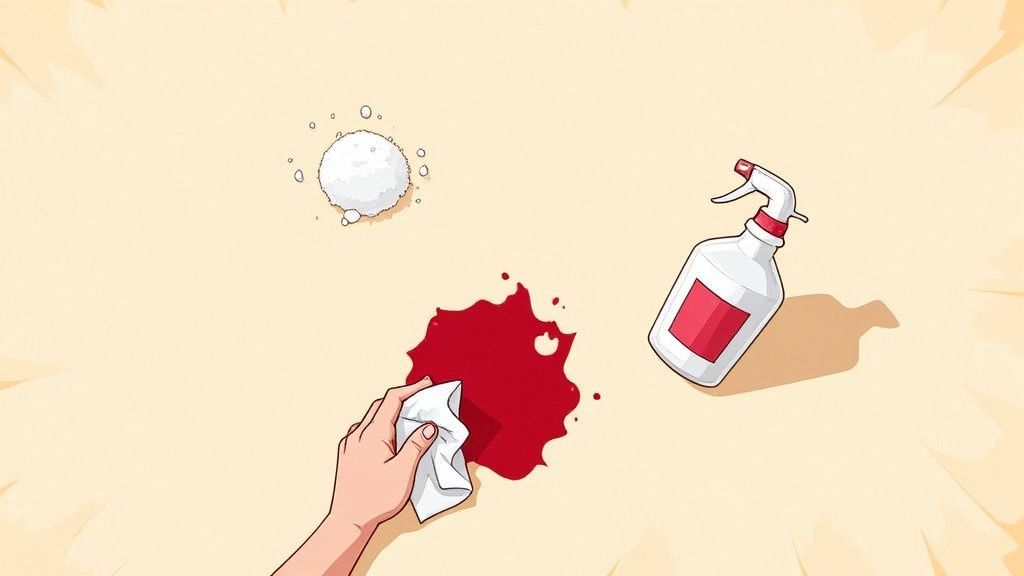
We've all been there. That heart-stopping, slow-motion moment when a glass of Merlot goes tumbling onto a pale carpet. It’s a scene that can ruin any gathering, but a fast response is your absolute best defence.
The most important thing you can do is to immediately blot the stain with a clean, dry cloth. Whatever you do, don't rub or scrub it. Getting to it within that first minute is crucial, as it stops the wine's powerful pigments from bonding permanently with your carpet fibres.
The First 60 Seconds After a Red Wine Spill
When red wine hits your carpet, you're not just dealing with a liquid; you're in a race against chemistry. Wine is packed with chromogens (the things that create colour) and tannins, which are natural binding agents. They're what helps the colour latch onto fibres so stubbornly. The longer that wine sits, the stronger and more permanent that bond becomes.
Your one and only goal right now is to soak up as much of that wine as you can before it seeps deep into the carpet's backing. This is precisely where most people go wrong. The natural instinct is to scrub frantically, but that’s the worst thing you can do. It grinds the stain deeper, damages the delicate carpet fibres, and makes the problem a whole lot bigger.
Immediate Red Wine Spill Response Plan
To avoid making a bad situation worse, you need a clear plan of action. This quick table breaks down the absolute must-dos and must-don'ts in those critical first few minutes.
| What You Should Do Immediately | What You Must Avoid Doing |
|---|---|
| Grab a clean, white cloth or paper towels. | Do not scrub, rub, or wipe the stain. |
| Blot firmly from the outside edge inwards. | Avoid using coloured or printed cloths that can transfer dye. |
| Lift straight up after blotting. | Don't pour water directly on the stain as it can spread it. |
| Use a fresh section of the cloth for each blot. | Never apply heat, as this will set the stain permanently. |
Following these simple rules can make the difference between a stain you can remove and one that’s there for good.
Now, let's get into the specifics. You need a clean, white, absorbent cloth—or even a thick stack of paper towels. Press down firmly on the spillage, then lift straight up. Turn the cloth to a clean, dry section and repeat. Always work from the outside of the stain towards the centre to stop it from spreading outwards.
The single most important rule is to blot, never rub. Rubbing grinds the pigments into the carpet pile and can untwist the fibres, creating a fuzzy, permanently damaged patch that stands out even if you manage to remove the colour.
This simple guide illustrates the basic process for tackling a red wine spill on your carpet.
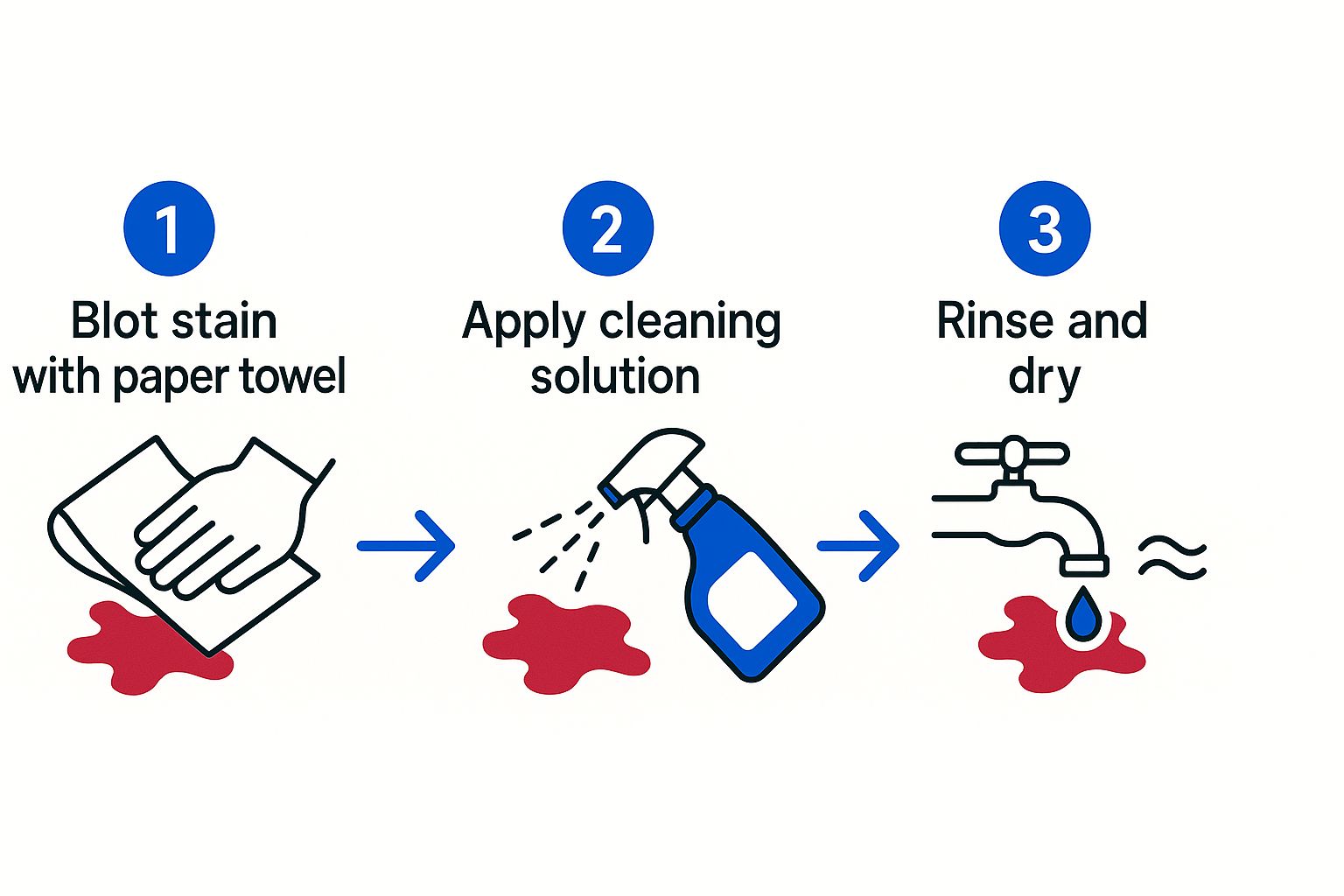
As the infographic shows, the entire process hinges on that careful blotting before you even think about applying a cleaning solution. This initial absorption step is what gives your later cleaning efforts a real chance of success.
And if you’re currently staring at a fresh red wine spill, you're certainly not alone. It's a surprisingly common household drama, with around 68% of UK households reporting at least one red wine disaster on their carpets each year. Given the UK's love for a good bottle of red, this isn't too shocking. You can read more about UK red wine consumption trends to see just how common it is.
Mastering The Blotting Method Without Spreading The Stain
Before you even think about reaching for a cleaning solution, your success with a red wine spill comes down to one crucial first step: blotting. I’ve seen it countless times – the first instinct is to grab a cloth and scrub for dear life. Honestly, that’s the worst thing you can do.
Scrubbing doesn't lift the stain. It actually grinds the wine's pigment deeper into the carpet fibres, often causing them to untwist and fray. You'll not only set the stain permanently but also create a fuzzy, damaged patch that looks awful even if you manage to get the colour out.
The real goal here is to absorb, not spread. You'll need the right tools for this. Plain white, lint-free cloths or a thick wad of paper towels are your best friends. Steer clear of any coloured or printed napkins or cloths, as their dyes can easily bleed onto your carpet and give you a whole new stain to deal with.
The Correct Blotting Technique
The right way to do this is with a simple but deliberate "blot and lift" motion. Always start at the outer edge of the stain and work your way towards the centre. This is vital for containing the spill and stopping it from getting any bigger.
Press your clean cloth firmly onto the spill for a few seconds to let it soak up the wine, then lift it straight up.
Never, ever wipe or use a circular rubbing motion. All that does is smear the wine across a larger area. You want to lift the wine directly out of the carpet pile, not push it around.
Once you’ve blotted, move to a fresh, clean part of your cloth for the next go. If you keep using a soaked section, you're just putting the wine right back where you found it. Keep at it, switching to fresh paper towels or rotating your cloth, until you can’t see any more red being lifted. This patient absorption is the foundation for getting red wine out of carpet and perfectly preps the area for the next step.
For more in-depth advice on tackling various spills, our professional carpet cleaning tips provide further guidance.
DIY Stain Removers from Your Kitchen Pantry
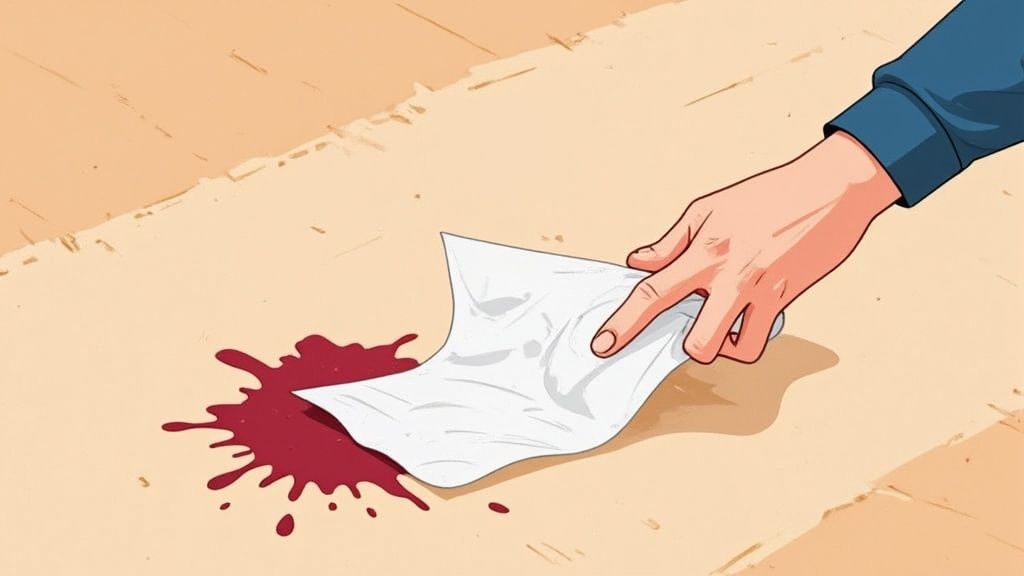
Before you head out for a specialist cleaner, have a quick look in your kitchen. You probably already have a few surprisingly effective ingredients that can tackle a fresh red wine spill. These everyday household items are a brilliant first line of defence, stopping a spill from becoming a permanent stain on your beautiful carpet.
It's a useful skill to have, especially here in the UK. We love our red wine so much that we're one of the top global importers, bringing in over $3 billion worth. With that much being enjoyed in homes across the country, the occasional spill is bound to happen.
The Classic Salt Method for Fresh Spills
If you've managed to act quickly and blot the fresh spill, salt is your best friend. This trick is all about osmosis; the salt crystals work to draw the moisture and wine out of the carpet fibres before the stain has a chance to set properly.
Once you’ve blotted up as much as you can, pour a generous amount of standard table salt over the entire stain. You really want to cover it completely, creating a small mound. Leave the salt to do its work for at least a few hours—or even overnight for the best results. You'll actually see it turn pink as it soaks up the wine. When it’s done, just vacuum it all up. The stain should be dramatically lighter, if not gone entirely.
The Vinegar and Baking Soda Paste
For a mark that’s a bit more stubborn, a paste of white vinegar and baking soda can work wonders. This combination is particularly effective on synthetic carpets like nylon or polyester, where the fizzing chemical reaction helps to lift the wine pigments from the fibres.
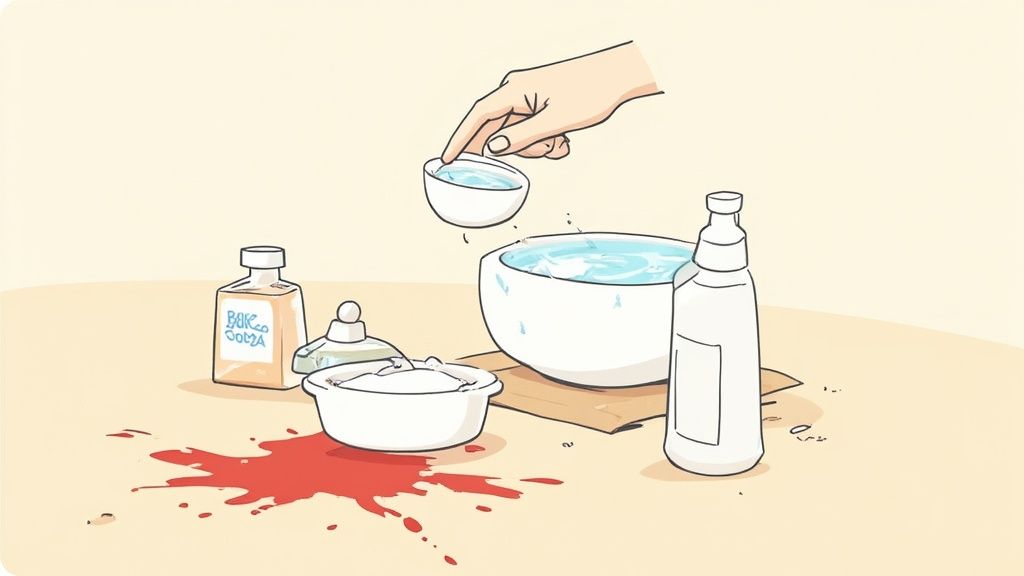
- Make the Paste: In a small bowl, mix two parts white vinegar with one part baking soda. It will fizz up at first—just wait for the reaction to calm down before you use it.
- Apply and Wait: Carefully spoon the paste over the stain until it's fully covered. Let it sit until it dries into a crust.
- Clean Up: Once it's dry, vacuum up all the residue. Finish by blotting the area with a clean cloth dampened with cold water. This rinses away any leftover vinegar, which can attract dirt if left behind.
Crucial Tip: Always test this solution on a small, hidden patch of your carpet first, like under the sofa or inside a cupboard. While it's generally safe for most synthetic carpets, the acidity of vinegar can sometimes affect the colour of natural fibres like wool.
Dish Soap and Hydrogen Peroxide for Light Carpets
If you have a light-coloured or white carpet, a mix of hydrogen peroxide and clear, non-bleach washing-up liquid can be a game-changer. Do not use this method on dark or coloured carpets. Hydrogen peroxide is a mild bleaching agent and will strip the colour out of the fibres.
Simply mix one part washing-up liquid with two parts 3% hydrogen peroxide. Gently dab the solution onto the stain, let it sit for a few minutes, and then blot it away with a cold, damp cloth.
While these DIY methods are excellent first-aid for spills, some marks are just too tough for pantry solutions. For guidance on those deeper, more ingrained blemishes, you might find our advice on how to remove stubborn carpet stains helpful.
How to Tackle Dried and Stubborn Red Wine Stains
It’s a sinking feeling, isn’t it? Spotting a deep-red stain on the carpet the morning after a party. Once red wine has had a chance to dry, its tannins get to work, bonding tightly with the carpet fibres. This makes it a much tougher challenge than a fresh spill, but don't despair. With the right know-how and a little patience, even those set-in marks can be conquered.
The secret is to move past simple blotting and dabbing. Dried stains need more intensive treatments designed to break down the hardened pigments. This usually means swapping your DIY pantry solutions for a proper commercial product.
Selecting an Effective Commercial Cleaner
When you’re facing down a stubborn red wine stain, not just any old bottle from the supermarket aisle will do. You need to look at the label for specific ingredients that are proven to work.
- Enzyme-Based Cleaners: Keep an eye out for products that list enzymes. These brilliant biological compounds are fantastic at breaking down the organic molecules in wine, particularly the tannins responsible for that deep red colour.
- Oxidising Agents: Ingredients like hydrogen peroxide or sodium percarbonate are your friends here. They work by breaking the chemical bonds of the stain’s colour molecules (chromogens), essentially bleaching the stain without harming the carpet itself.
Always, always do a patch test before going all-in with a new cleaner. Find a hidden spot—under the sofa or in a corner—and apply a small amount. This quick check ensures the product won't discolour or damage your carpet fibres.
A Professional Trick for Old Stains
Dried stains are brittle, and that makes them hard to lift. Here's a trick we use in the trade: soften the stain before you apply your cleaner. All you need is a few drops of pure glycerin, which you can find at most chemists.
Gently work the glycerin into the stain with your fingertip and let it sit for about thirty minutes. This helps to rehydrate and loosen the dried wine, making your cleaning solution far more effective when you finally apply it.
For those incredibly stubborn marks on a white or light-beige carpet, a carefully applied hydrogen peroxide solution can be your last resort. Use a 3% solution, dabbing it on sparingly. Never pour it. Be warned, though, as this does carry a risk of lightening the carpet, so it should only be attempted on light-coloured, synthetic materials after you’ve done a successful patch test.
If these techniques sound a bit daunting, it might be a sign that the stain needs a more powerful approach. Learning how to deep clean carpets at home can give you more insight into keeping your carpet in top condition.
Knowing When to Call a Professional Carpet Cleaner
While DIY methods are fantastic for first-aid on a fresh red wine spill, there are definitely times when admitting defeat is the smartest move. Knowing your limits can save you from accidentally setting a stain, turning a simple mishap into a costly carpet replacement.
The real key is knowing when to stop. If you've tried a couple of the home remedies we've covered and that stubborn purple mark is refusing to budge, it’s time to put down the cloth. Bombarding it with different chemicals can cause a reaction that makes the stain permanent.
When a Professional Is Your Best Bet
Some situations are almost always best left to the experts right from the get-go. Calling in a pro is your safest option if you're dealing with:
- Delicate Fibres: Stains on natural materials like wool or silk carpets need a very delicate touch. These fibres can be easily ruined by the wrong pH levels in homemade solutions, leading to permanent discolouration or damage.
- Large or Saturated Spills: If an entire bottle has soaked right through the carpet, the wine has almost certainly reached the underlay. Only professional-grade hot water extraction can truly deep clean this far down.
- Failed DIY Attempts: Once a stain has been treated with multiple household products, it becomes a much more complex problem. A professional has the experience to identify what’s been used and apply the correct neutralisers before cleaning.
A professional cleaner’s secret weapon is powerful hot water extraction (often called steam cleaning), which reaches far deeper than any machine you can hire. Their specialised, pH-balanced solutions are formulated to break down stubborn wine tannins without harming your carpet fibres, protecting your investment.
Even though UK wine consumption has levelled out to around 19.6 litres per adult each year, a recent market report from wineaustralia.com shows the number of people drinking wine weekly has actually gone up by 9%. That means more cosy nights in, and, let's be honest, more opportunities for spills!
Ultimately, calling a professional isn't just about getting a stain out; it's about proper restoration. To get a better sense of what a professional service can do for your home, it’s worth exploring the full benefits of professional carpet cleaning services.
Frequently Asked Questions About Red Wine Stains
Even with the best guide in hand, that moment a glass of red wine tips over can spark a wave of panic and questions. It's a high-stakes spill, no doubt. Let's tackle some of the most common myths and nagging worries to make sure you can act with confidence.
Can I Use White Wine to Remove Red Wine?
You’ve probably heard this one at a party before, but it’s a myth that just won’t die. Pouring white wine over a red wine stain is not the magic fix it's made out to be. While it might seem to dilute the colour for a moment, it contains zero cleaning properties.
All you're really doing is adding more liquid to the problem. This can make the original stain spread even further into your carpet's fibres, leaving you with a bigger, stickier mess than you started with. It's always better to stick with proven methods designed to lift the stain out completely.
Will Club Soda Really Work on a Spill?
Club soda can be a decent first responder if it's all you have within arm's reach. The fizzing action can help lift some of the wine from the very tips of the carpet fibres, and the water helps dilute it.
But it’s far from a complete solution for getting red wine from carpet. Think of it as battlefield triage—a temporary measure to stop things from getting worse. You absolutely must follow it up with a real cleaning solution, like the salt method or a vinegar and water mix, to deal with the pigment left behind.
What should I do if the stain reappears after cleaning? This is a really common issue called 'wicking.' It happens when stain residue trapped deep down in the carpet backing or underlay travels up to the surface as the carpet dries. To fix it, lay a clean, thick white towel over the still-damp area, weigh it down with something heavy overnight, and let the towel draw out the remaining residue.
If the stain keeps wicking back up after a couple of tries, it’s a strong sign the spill has soaked right through to the underlay. At that point, your best bet is to call in the professionals. Getting a clear idea of how much does carpet cleaning cost can help you decide on the next steps.
When DIY efforts just aren't cutting it, trust the experts. AG Carpet Specialists uses professional-grade equipment and solutions to eradicate even the most stubborn stains safely and effectively. Get your free quote today!