
When it comes to cleaning a sisal rug, there’s one golden rule that overrides all others: keep it dry. The only genuinely safe way to clean sisal is with a dry-cleaning method, as any form of water can cause irreversible damage. Forget about steam cleaners, wet shampoos, or even just a damp cloth—saturating the fibres is a recipe for disaster.
Why Water Is Your Sisal Rug’s Worst Enemy

Before you tackle a spill, it's vital to understand what makes sisal so different from other materials. Derived from the Agave sisalana plant, sisal is a natural plant fibre prized for its durability and beautifully coarse, organic texture. But those exact qualities are what make it so vulnerable to moisture.
Sisal fibres are hygroscopic, a fancy way of saying they absorb moisture like a sponge, both from the air and from any liquid they touch. When the fibres get wet, they swell up. As they dry, they shrink and often become brittle. This natural process is what leads to a whole host of problems.
The Risks of Using Water
Exposing your rug to water, even a small amount, can cause issues that are difficult, if not impossible, to fix. The most common headaches we see include:
- Water Stains: It’s a cruel irony, but water is the number one cause of stains on sisal. It creates dark, ring-like marks as the natural tannins and dyes in the fibres are pulled to the surface during evaporation.
- Shrinkage and Warping: The expansion and contraction of the fibres can completely distort the rug’s weave. This can cause it to buckle, warp, or shrink, leaving it looking misshapen and uneven.
- Mould and Mildew: Because sisal holds onto moisture so well, a damp patch can quickly become a breeding ground for mould and mildew, resulting in musty smells and potential health risks. Knowing the best way to dry a carpet after cleaning is a useful skill, but with sisal, prevention is everything.
To help illustrate the point, here’s a quick comparison of the two main approaches.
Water-Based vs Dry-Cleaning Methods for Sisal
| Cleaning Method | Risk to Sisal Fibres | Recommended? |
|---|---|---|
| Water-Based (e.g., Steam, Shampoo) | High. Causes shrinkage, watermarks, warping, and fibre breakdown. High risk of mould. | Absolutely Not |
| Dry-Cleaning (e.g., Absorbent Powder) | Low. Cleans without saturating fibres, preserving texture and structure. | Yes, The Only Safe Option |
As you can see, the choice is clear. Dry-cleaning methods are designed to lift dirt without introducing the very element—water—that causes all the damage.
This extreme sensitivity to moisture is the root cause of most sisal rug problems. In fact, UK cleaning experts report that over 80% of stains and damage to sisal rugs are a direct result of improper moisture exposure during cleaning attempts. Learn more about these expert findings on sisal carpet cleaning.
Ultimately, sticking to a dry-cleaning approach is the only way to ensure your sisal rug stays beautiful for years to come.
Gathering Your Essential Cleaning Toolkit
Getting a sisal rug clean starts long before a spill even happens. The secret is having the right supplies ready to go. When you’re dealing with natural fibres like sisal, your toolkit is surprisingly simple, but every single item is there for a reason. Forget everything you know about standard carpet cleaning; sisal demands a gentle, completely water-free method.
First things first, you'll need a suction-only vacuum cleaner. This is non-negotiable. A normal vacuum with a beater bar or rotating brush will absolutely wreck a sisal rug over time, pulling, snagging, and fraying the beautiful woven fibres. Your aim is just to lift the dirt out, not scrub it in.
Next on the list is a good quality dry-cleaning powder. These absorbent compounds work wonders, lifting out grime and getting rid of odours without using a single drop of liquid. There are some fantastic eco-friendly rug cleaning options available that are much safer for your home and the planet.
Key Tools for Effective Cleaning
To get that powder worked into the weave, you’ll need a soft-bristled brush. A stiff brush can be just as harsh as a vacuum’s beater bar, so go for something gentle. A clothes brush or even the soft brush from a dustpan and brush set works perfectly. It’s also wise to keep a couple of clean, white microfibre cloths and a dull knife or a spoon handy for scraping up spills the moment they happen.
This simple infographic breaks down the core process using these essential tools.
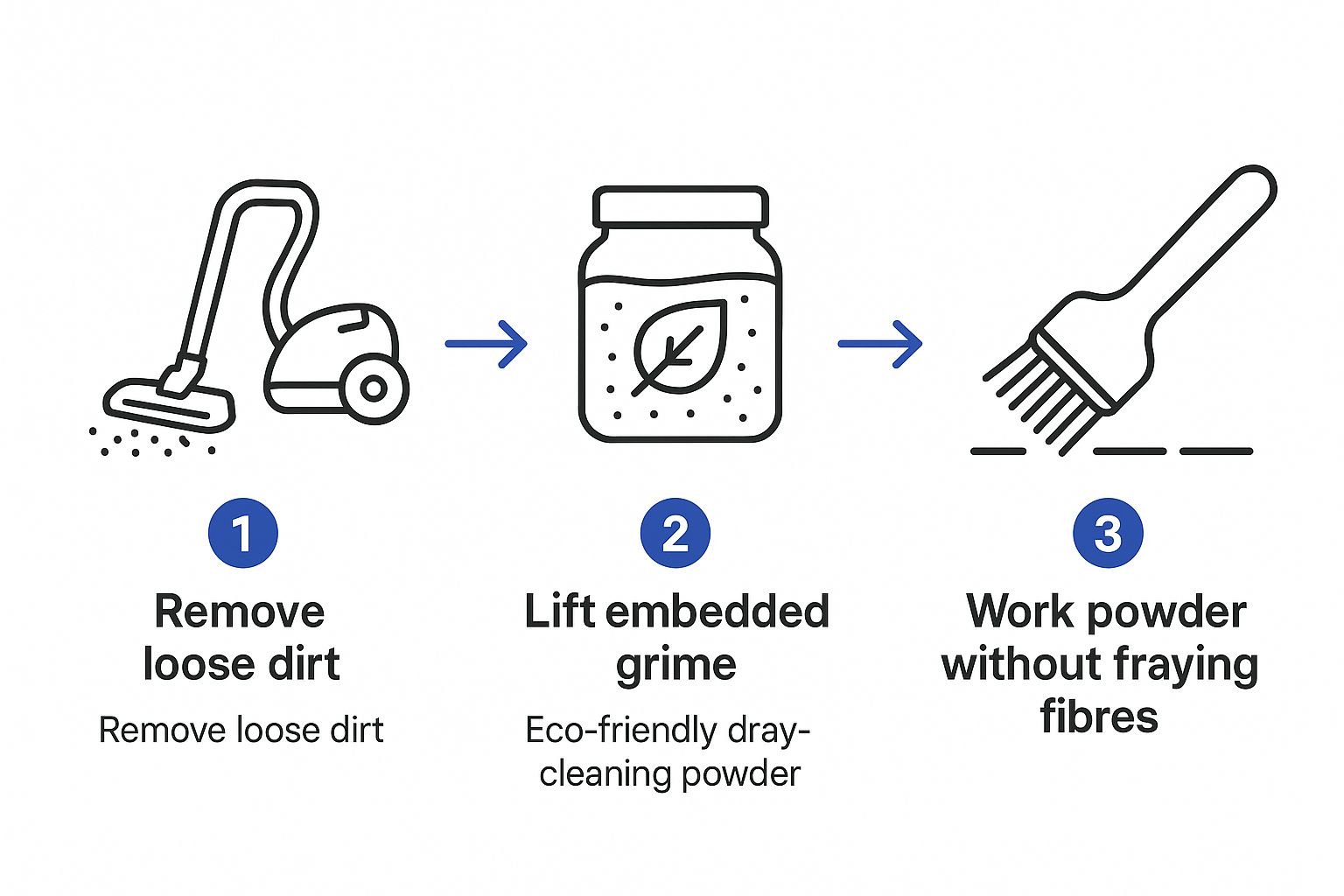
As you can see, each tool plays its part in lifting dirt safely and effectively without moisture. When putting your kit together, it’s worth noting that many versatile home cleaning tools can be used for different jobs around the house. With these few items on standby, you'll be able to tackle routine upkeep and those inevitable accidents with confidence.
Your Dry-Cleaning Method for a Fresher Rug
With your toolkit ready, it's time to put what you've learned into practice. Knowing how to clean a sisal rug with a dry method isn't complicated, but it does demand a bit of patience and a gentle touch. The entire process is about lifting out the grime without introducing the moisture that causes those dreaded watermarks and warping.
The first, and most crucial, phase is a thorough vacuuming. Switch your vacuum to its suction-only setting and go over the whole rug, moving slowly in the direction of the weave. This is important as it prevents the fibres from fraying or getting damaged. Don't rush this stage; a slow, deliberate pass is far more effective at pulling up deep-seated dust and grit than a quick once-over. Think of it as preparing a canvas—you need a clean slate before you can really get to work.
Applying and Activating the Cleaning Powder
Once you're satisfied that all the loose debris is gone, you can apply your dry-cleaning powder. Sprinkle a light, even layer across the entire surface of the rug. A common mistake we see is people using far too much, thinking that more powder means a deeper clean. In reality, a thin, consistent dusting is all you need for the granules to work their magic.
Next, take your soft-bristled brush and gently work the powder into the rug’s fibres. You want to use gentle, circular motions to ensure the powder gets right down into the weave where all the dirt and oils are trapped. This agitation is what 'activates' the compound, allowing its absorbent properties to draw out the grime. This step is particularly important for high-traffic areas where dirt is more compacted. For a deeper dive, our complete guide on professional rug dry cleaning offers more advanced techniques.
Important Tip: Always test the dry-cleaning powder on a small, inconspicuous area first, perhaps under a sofa or a chair. This quick check ensures there's no unexpected discolouration before you commit to treating the entire rug.
The Final Steps for a Fresh Finish
Now for the easiest part: waiting. You absolutely must let the powder sit for the recommended time specified on the product's packaging. This 'dwell time' is usually around an hour, and it's when the powder is actively absorbing all that dirt and any lingering odours. Don't be tempted to cut it short.
After the time is up, it's time to vacuum the rug again. Once more, use the suction-only setting. Go over the surface multiple times, and from a few different directions, to ensure you've removed all the powder and the grime it has captured. The result should be a visibly brighter, fresher-smelling rug, all achieved without a single drop of water.
How to Tackle Spills and Stains Immediately
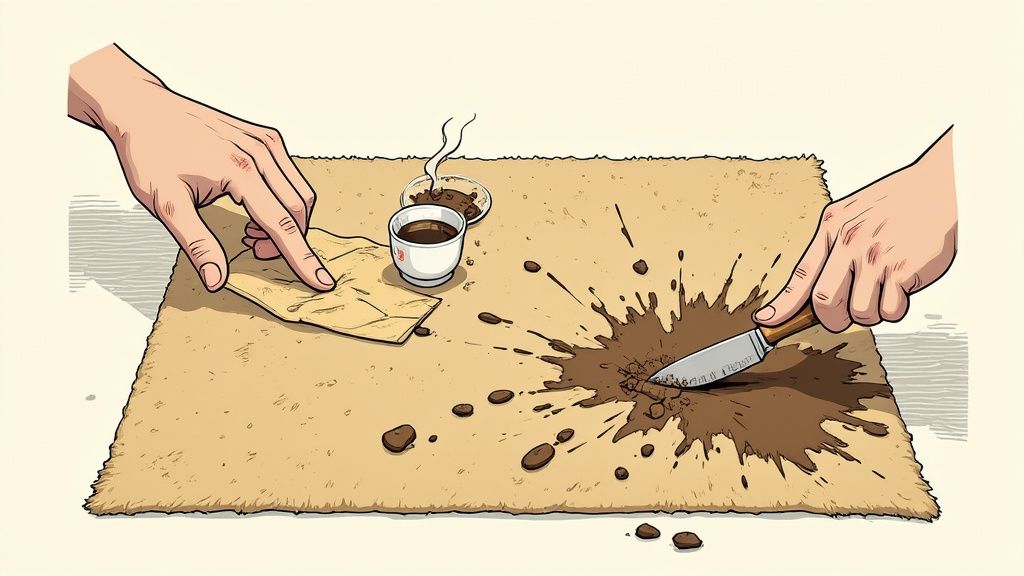
Accidents are bound to happen, but a spillage on your beautiful sisal rug doesn't have to be a permanent mark. The absolute key is to act quickly and correctly, because your immediate response is what makes all the difference in preventing a stain from setting.
First things first, forget what you know about cleaning standard carpets. When it comes to sisal, aggressive scrubbing or dousing it with water is the worst thing you can do. This will only push the stain deeper into the natural fibres and cause those dreaded watermarks. The goal here is containment and gentle removal, not saturation.
Managing Liquid and Solid Spills
Your approach will depend entirely on what’s been spilt. For liquids like red wine or coffee, your instinct needs to be blotting, never rubbing.
-
For Liquid Spills: Grab a clean, dry, white cloth or a few paper towels right away. Press down firmly on the spill to soak up as much as you possibly can. Keep using fresh, dry sections of the cloth until no more liquid is transferring over.
-
For Solid or Muddy Messes: If you're dealing with dropped food or a muddy footprint, patience is your friend. Let it dry completely. Once it’s hard, use the edge of a spoon or a dull knife to gently scrape off the solid bits, then vacuum up whatever is left.
Only after you’ve removed the excess can you think about spot treatment.
Remember, the natural fibres in sisal are incredibly absorbent. Rubbing a spill grinds the liquid deeper into the plant material and can even damage the weave, making the problem far worse. Gentle blotting is always the correct approach.
Now it's time to use your dry-cleaning powder for a targeted treatment. Sprinkle a small amount directly over the affected area, just enough to cover the mark. Work it in gently with your soft-bristled brush and let it sit for at least one hour before vacuuming it up thoroughly.
For very stubborn marks, you may need to repeat this process. Dealing with spills effectively is crucial for preventing long-term damage, but if you're up against a particularly tough one, our guide on how to remove stubborn carpet stains has more expert advice.
Simple Habits for Long-Term Sisal Rug Care
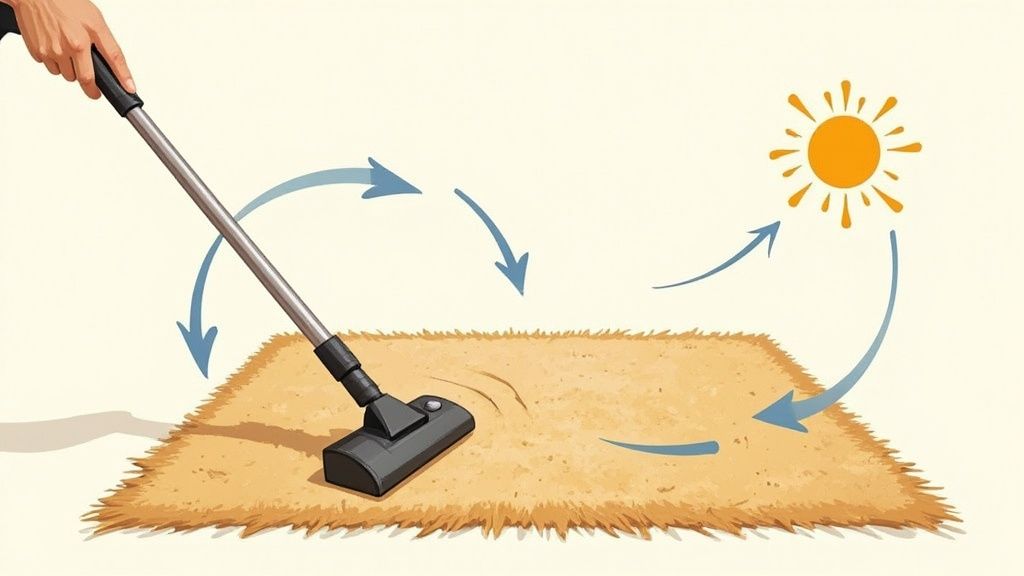
Knowing how to tackle a spill is useful, but the real secret to keeping a sisal rug looking its best for years lies in the small, consistent habits you build. A bit of proactive maintenance goes a much longer way than any intensive deep clean, preserving the rug's natural texture and preventing it from wearing out before its time.
The most important part of this routine is regular vacuuming. Think of all the grit, dust, and tiny bits of debris that get tracked in; with every footstep, they act like sandpaper, slowly grinding away at the natural fibres. A good vacuuming lifts this abrasive build-up before it has a chance to do any real damage.
The Right Vacuuming Technique
As any UK natural rug specialist will tell you, sisal rugs need vacuuming at least once a week, and always with suction-only settings. Beater bars or powerful rotating brushes are far too aggressive and will quickly cause the fibres to fray and weaken. A simple weekly vacuum is genuinely the most effective thing you can do to protect your investment. For more expert advice, check out these tips on proper sisal rug maintenance from UK experts.
Beyond vacuuming, a couple of other simple actions can make a massive difference:
- Rotate Your Rug: Every six months or so, give your rug a 180-degree turn. This simple trick ensures that foot traffic and any sun exposure are spread out evenly, preventing one area from fading or wearing down faster than the rest.
- Protect from Sunlight: Sisal is a natural plant fibre, and just like wood, it can fade if left in harsh, direct sunlight for too long. If your rug is near a sunny window, think about using blinds or curtains during the brightest parts of the day to protect its colour.
This kind of consistent care might sound incredibly basic, but it’s the absolute foundation for a long-lasting, beautiful rug. By stopping abrasive dirt from building up and managing wear, you drastically cut down the need for more intensive cleaning later on.
These habits don’t demand much effort, but they are crucial for keeping your sisal rug looking pristine.
Common Questions About Sisal Rug Cleaning
Even with the best advice, some situations can leave you scratching your head. Understanding how to clean a sisal rug often brings up unique queries, especially when pets, odours, and professional services enter the picture. We've gathered some of the most frequent questions to give you clear, straightforward answers.
One common concern is dealing with pet odours. If your furry friend has an accident, the key is acting fast to blot any liquid. After blotting, a generous application of your dry-cleaning powder, left for several hours, can often lift the stain and neutralise the smell without harming the fibres.
Can I Use Baking Soda on Sisal?
Baking soda is a fantastic natural deodoriser and can be a great alternative to commercial dry-cleaning powders for a general refresh. You can sprinkle it lightly over the rug, let it sit for an hour or two to absorb any musty smells, and then vacuum it up thoroughly using a suction-only setting.
However, for actual dirt and grime, a dedicated absorbent powder is often more effective as it's specifically designed to cling to dirt particles.
A Quick Tip: While baking soda is safe for odours, avoid using it on wet spots. Mixing baking soda with liquid can create a paste that becomes incredibly difficult to remove from the coarse weave once it dries.
When Is Professional Cleaning Necessary?
While DIY methods are perfect for regular upkeep and minor spills, some situations really do call for a professional. If you're dealing with a large, deeply set stain or your rug simply hasn't had a proper deep clean in years, an expert touch is wise. Professionals use specialised low-moisture equipment that provides a much deeper clean than is possible at home.
The frequency depends on foot traffic, but our guide on how often to clean carpets offers some useful benchmarks. A professional clean every 18-24 months can extend your rug’s life significantly.
For a truly deep, restorative clean that protects your natural fibre investment, trust the experts. AG Carpet Specialists uses professional-grade, eco-friendly methods to refresh your sisal rug safely. Contact us for a free quotation at https://www.agcarpetspecialist.co.uk.