When you're trying to get tar out of your carpet, the first few moves are always the most critical. It’s all about a gentle touch—you’ll want to carefully scrape away the excess, then blot the remainder with a good solvent like WD-40 or a dedicated dry-cleaning solution.
The one thing you must never do is rub the stain. That’s a surefire way to push that sticky mess deeper into the carpet fibres, making it a much bigger problem. Acting fast with the right approach is everything.
What to Do Immediately After Finding a Tar Stain
It’s a horrible feeling, spotting that black, sticky blob on your lovely carpet. Maybe it was tracked in after walking near a freshly paved road, or perhaps it’s from a little DIY job gone wrong. Whatever the cause, what you do right now will determine whether this is a minor clean-up or a permanent mark.
Your first job is to contain the mess. Before you even think about reaching for a cleaner, you need to lift off as much of the surface tar as you can without making it worse.
The Scrape and Blot Technique
Fighting the urge to scrub is half the battle. Scrubbing will only embed the tar and make it near-impossible to remove.
Instead, find a dull knife—a butter knife from the kitchen drawer is perfect—or even the edge of a spoon. Gently scrape at the surface of the tar, working from the outside edge in towards the middle. This stops you from accidentally spreading the stain. The goal is just to lift away any of the solid, gloopy bits.
Once the excess is gone, it's time to blot. Grab a clean, white cloth (or a few paper towels) and press down firmly on what’s left of the stain. This action encourages the sticky residue to transfer up into your cloth, not grind it further into the carpet.
Crucial Tip: Resisting the urge to rub is non-negotiable. Rubbing creates friction, which can warm the tar and cause it to liquefy, smearing it across a larger area and bonding it more tightly to the carpet fibres.
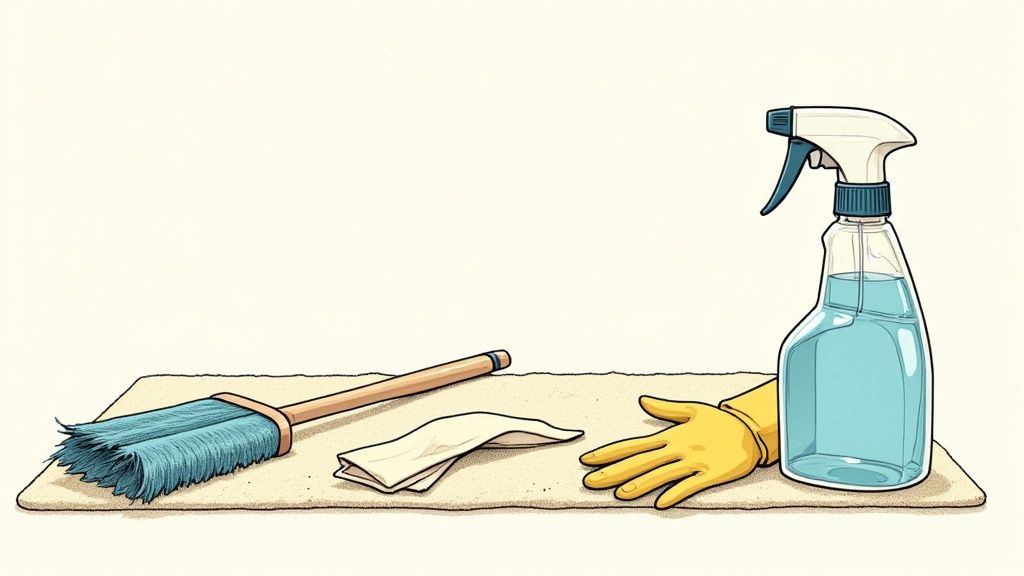
Your Essential Tar Removal Toolkit
Getting all your supplies together before you start will make the whole process smoother. Having everything you need to hand means you can work efficiently without leaving a half-treated stain to set.
Here's a quick checklist of what you'll need.
| Item | Purpose | Important Note |
|---|---|---|
| Dull Knife or Spoon | To gently scrape away excess solid tar. | Avoid sharp blades that could cut carpet fibres. |
| White Cloths/Paper Towels | For blotting the stain and applying solvents. | Use white to prevent dye transfer onto the carpet. |
| Protective Gloves | To protect your hands from sticky tar and cleaners. | Disposable gloves are ideal for easy cleanup. |
| Small Bowl | For mixing any cleaning solutions. | Choose a non-porous material like glass or ceramic. |
With these items ready, you're all set to tackle the stain safely and effectively.
Choosing the Right Cleaning Method for Your Carpet
Not all carpets are created equal, and they certainly can't all handle the same aggressive cleaning treatments. Picking the wrong solvent is one of the quickest ways to turn a simple tar stain into a costly carpet replacement. What your carpet is made of—be it a tough synthetic like nylon, delicate wool, or a natural fibre blend—really dictates the entire game plan.
A hard-wearing office carpet made from nylon, for example, can probably take a stronger solvent like mineral spirits. On the other hand, a plush wool rug needs a much gentler touch. Something that seems harmless, like a citrus-based cleaner, could easily cause permanent discolouration or damage the fibres.
This is exactly why a one-size-fits-all approach just doesn't cut it for tar removal. The real goal is to match the cleaning agent to the carpet material for a safe and effective result.
Identifying the Best Cleaning Agent
You've got a few options at your disposal, from items you might already have at home to more specialised commercial products.
- WD-40 or Mineral Spirits: These oil-based solvents are fantastic at dissolving sticky, greasy things like tar. They're generally safe on most synthetic carpets but use them with real caution on any natural fibres.
- Commercial Tar Removers: These are formulated specifically for the job and are often your most effective bet. The UK's cleaning industry, which brought in around USD 3,988.7 million in 2022, is seeing a big rise in eco-friendly solvents designed for tricky tasks like this.
- Mild Detergent Solution: For lighter stains, or as a final clean-up step, a simple mix of clear washing-up liquid and water can help lift any remaining oiliness.
The UK carpet cleaning market is expected to grow to USD 5,980 million by 2030, which just shows how much demand there is for specialised solutions that get the job done without ruining delicate materials.
The Non-Negotiable Patch Test
Before you even think about putting a cleaner on the actual stain, you absolutely must do a patch test. This is without a doubt the most crucial step to prevent a cleaning disaster.
Find a hidden spot on your carpet—maybe inside a wardrobe, under the sofa, or on a spare scrap if you have one. Put a small amount of your chosen solvent onto a clean, white cloth and gently dab it on the test area. Let it sit for at least an hour, or until it's completely dry, then have a close look for any changes.
Key Takeaway: If you notice any colour bleeding, fading, or a change in the carpet's texture, do not use that product. The results from this simple test will tell you everything you need to know. For a deeper dive into techniques and product recommendations, have a look at our guide on how to remove tar from carpets.
Right, this is where the real work starts. You've done your prep work, tested your solvent, and now it's time to actually get that nasty tar stain out of your carpet fibres. The most important thing to remember here is to be patient and use the right technique—if you rush this part, you could end up with a much bigger problem.
Start with the Freeze Technique
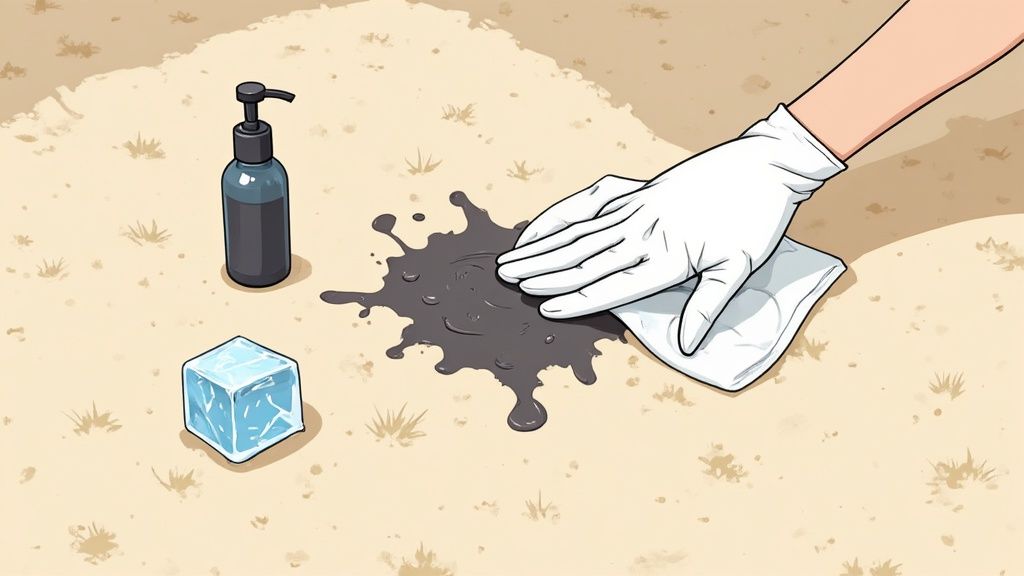
Before you even think about reaching for a liquid cleaner, your best first move is to make the tar brittle. Just grab a handful of ice cubes, seal them in a plastic bag, and place it right on top of the tar. You’ll want to leave it there for about 10–15 minutes.
This simple step freezes the tar, changing it from a sticky, gooey mess into a hard, solid lump. Once it’s properly frozen, you can take something like a dull knife or the edge of a spoon and gently start chipping away at it. It's amazing how much of the bulk you can remove with this trick alone, long before any solvents come into play.
Applying the Solvent Correctly
Now, for the tar that’s worked its way into the fibres. The number one rule here is to never pour the solvent directly onto the carpet. It's a common mistake, but it can oversaturate the area, potentially damaging the carpet's backing and spreading the stain.
Instead, lightly dampen a clean, white cloth with your chosen solvent. You want it damp, not soaking wet. Start dabbing at the stain, working from the outside edge towards the centre. This is crucial because it stops the stain from bleeding outwards and creating an even larger, more noticeable ring.
This image shows the best way to approach the blotting and application process.
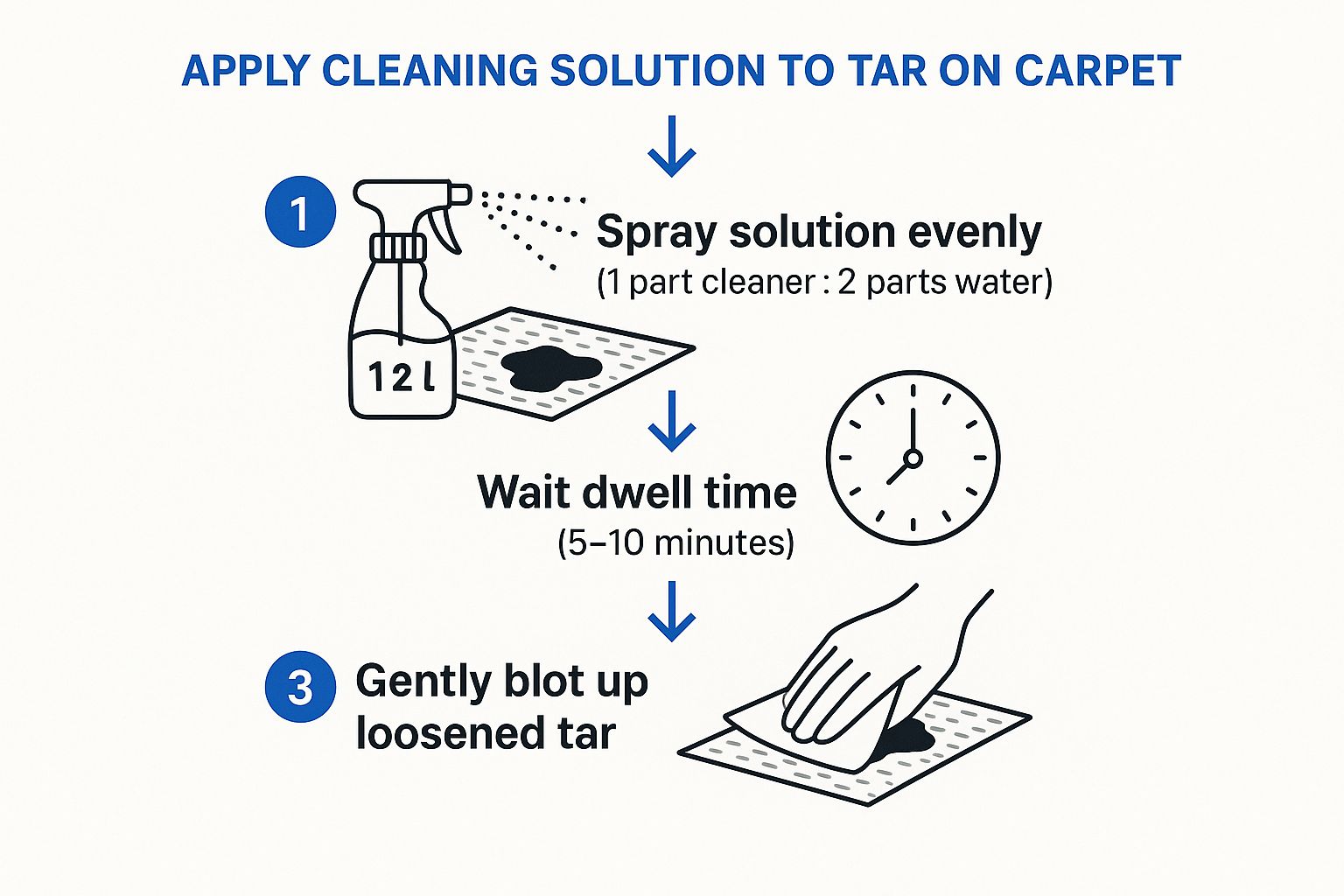
As you can see, it’s all about a controlled application and giving the solvent a moment to break down the tar before you gently lift it away.
Patience is Key
You'll soon see the tar transferring from your carpet onto the cloth. As one area of the cloth gets dirty, be sure to switch to a clean section. This prevents you from accidentally rubbing the grime back into the carpet. And for your own safety, especially if you're using chemical cleaners, it’s always a good idea to wear a pair of protective fitted grip gloves.
Pro Tip: Don't expect to get this done in one go. You'll almost certainly need to repeat the blotting process several times, using a fresh bit of solvent on your cloth each time. Just keep at it. The best sign you're done is when your cloth comes away completely clean after blotting the area.
This methodical approach isn’t just for tar; it’s a great technique for many stubborn stains. If you’re tackling other tough spots, you can apply these same principles. For more specific advice, take a look at our guide on https://www.agcarpetspecialist.co.uk/2025/06/29/how-to-remove-stubborn-carpet-stains/.
Once the stain is completely gone, you're ready for the final rinse and restoration steps.
Finishing the Job and Restoring Your Carpet
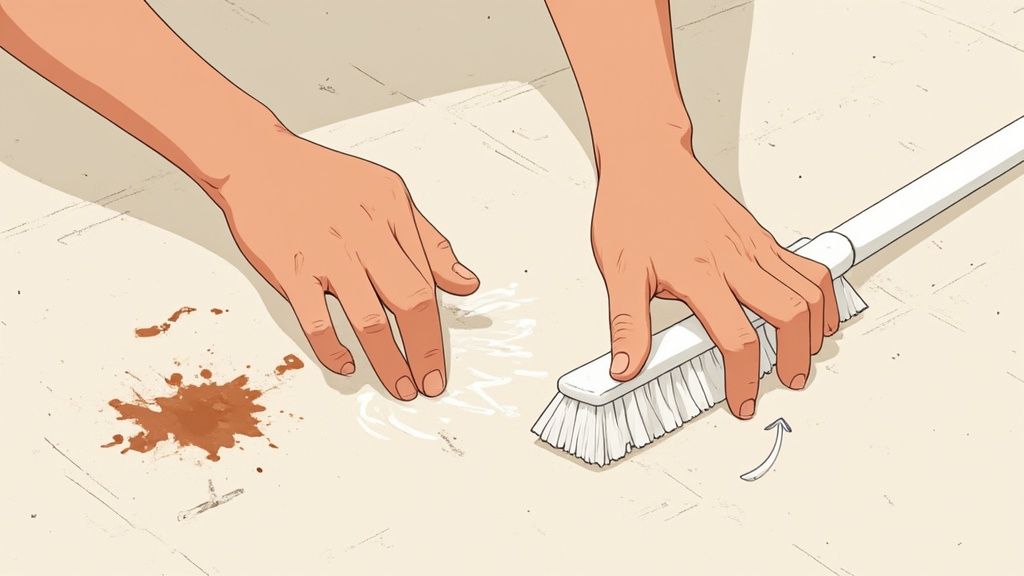
Getting the tar out feels like a massive victory, but the job isn't quite finished yet. Now it's time to rinse, dry, and restore the area to make the repair completely invisible. If you skip this stage, you risk leaving behind a stiff patch or a sticky residue that will just attract more dirt down the line.
The first thing to do is neutralise any leftover solvent. Simply mix a few drops of a clear, mild washing-up liquid with some warm water. It’s important not to use a coloured soap, as the dye could easily transfer to your carpet fibres.
Take a fresh, white cloth, dampen it in this soapy solution, and gently blot the treated spot. This will lift away any oily film left by the cleaner without soaking the carpet. Once that's done, grab a new cloth dampened with just plain water to rinse the area, making sure no soap is left behind.
Proper Drying and Fluffing Techniques
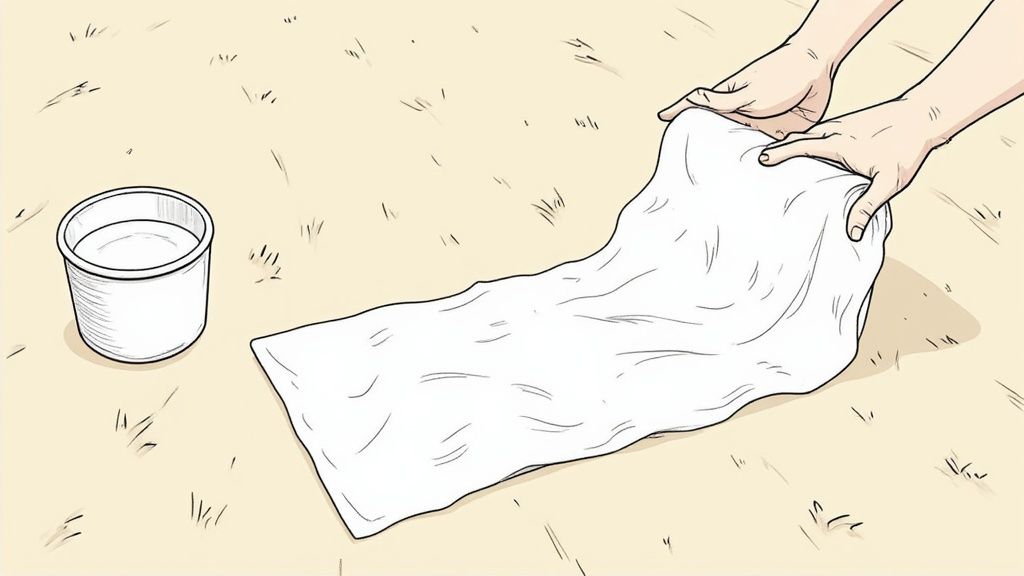
Drying the area properly is essential to prevent water marks or, even worse, mildew from forming. Start by pressing down firmly on the damp patch with a thick, dry towel to absorb as much moisture as possible. You can even stand on the towel for a bit of extra pressure.
To speed things up, you can aim a fan at the spot or use a hairdryer on its coolest setting. Steer clear of any heat, as it can easily damage synthetic carpet fibres or cause wool to shrink.
Final Touch: Once the carpet is completely dry, you'll probably notice the fibres look a bit flat or matted where you've been working. To restore its original texture, just vacuum the area thoroughly. For a deeper pile carpet, you can also gently brush the fibres with your fingertips or a soft-bristled brush to help lift them back up.
For more information on keeping your carpet in great condition after stain removal, take a look at our guide on how to deep clean carpets at home. It’s packed with tips to help keep your entire floor looking its best.
Knowing When to Call a Professional Carpet Cleaner
While having a go yourself can often work for small mishaps, there are definitely times when tackling a tar stain is a gamble. Knowing when to step back and call in the experts is key to protecting your investment, especially if you’re dealing with a particularly stubborn or risky situation.
Sometimes the scale of the problem is the biggest red flag. A tiny spot of tar brought in on a shoe is one thing, but a large, widespread stain needs professional equipment to treat without just spreading the mess further. Likewise, if the tar has had weeks to set and truly bond with the carpet fibres, most DIY solvents simply won't have the power to break it down.
Protecting Valuable and Delicate Carpets
The material of your carpet is another critical factor. High-value carpets made from delicate materials like silk, antique wool, or certain natural fibres can be permanently damaged by the harsh chemical solvents found in many off-the-shelf products. Professionals have access to specialised, pH-balanced cleaning agents and know the precise techniques these materials demand.
Here in the UK, we're seeing a clear trend towards calling in professionals for tough stains like tar. It makes sense – an improper removal attempt can easily make the stain bigger or, worse, ruin the carpet fibres for good. In fact, around 61% of UK consumers feel more confident about health and safety when they see professional cleaners at work, which really shows the trust people place in expert services.
When to Make the Call: If you're facing a massive stain, an old set-in mark, or have a delicate wool or silk carpet, calling a professional is your safest bet.
A professional also comes equipped with the right safety gear and powerful extraction machines. These are vital for removing both the stain and the cleaning agents completely, leaving no sticky or harmful residues behind. To get a better idea of what this involves, you can learn more about the professional carpet cleaning process and see why it delivers superior results every time.
Common Questions About Carpet Tar Removal
Even with the clearest instructions, tackling a stubborn substance like tar can bring up a few questions. Let's run through some of the most common queries we get.
Can Petrol Be Used to Remove Tar
While it’s true that powerful solvents like petrol or lighter fluid can dissolve tar, using them on a carpet is something we strongly advise against. These substances are extremely flammable, release toxic fumes, and can cause permanent damage by dissolving the latex adhesive in your carpet’s backing.
It's far safer to stick to specially formulated, commercially available products or one of the tested household solutions we mentioned earlier. Whatever you use, always make sure the room is well-ventilated.
What to Do with Hardened Tar
A tar stain that has hardened over time needs a slightly different approach before you start with solvents. The trick is to freeze it first. Just place an ice cube in a plastic bag and hold it against the stain.
This makes the tar brittle, allowing you to gently break it apart and scrape away most of the solid mass with a dull knife. Once you've removed the bulk, you can then treat what’s left of the stain with your chosen cleaning solution.
This freezing technique is a real game-changer for old stains. It turns a sticky, seemingly impossible mess into something manageable before you even introduce any cleaning chemicals, significantly improving your chances of complete removal.
If the tar is gone but the area looks a bit flat and tired, a proper clean will help bring it back to life. To learn more, check out our insights on how often to clean carpets to keep them looking their best.
For those stubborn stains that refuse to budge, don't risk damaging your carpet. AG Carpet Specialists offers expert, eco-friendly cleaning services across Cheltenham, Gloucester, and Stroud. Contact us today for a free quotation!