
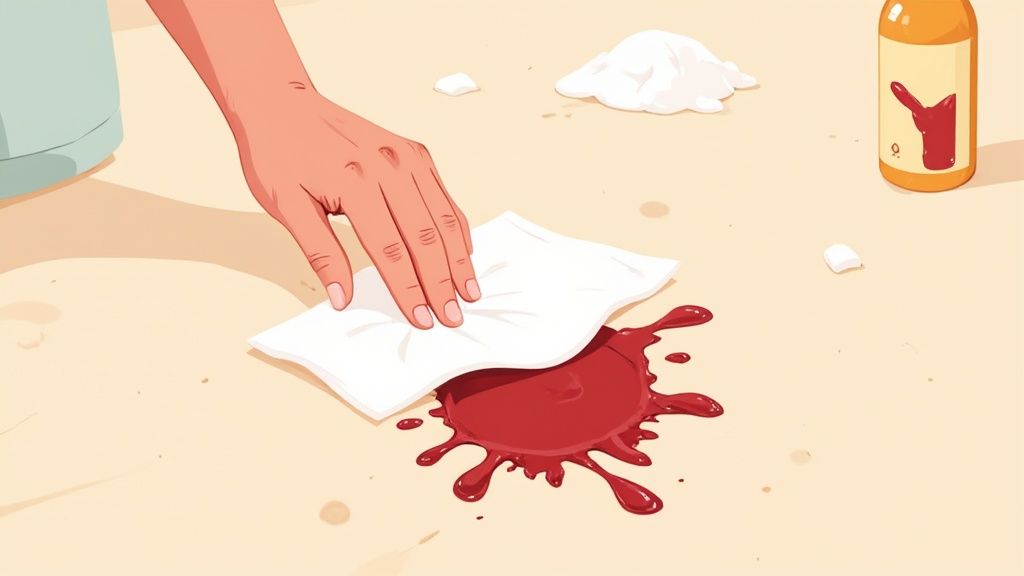
That heart-stopping moment when a glass of red wine tumbles onto your pristine carpet is a feeling we all know too well. What you do in that first minute, though, can make all the difference. Your immediate reaction is absolutely critical.
You need to grab a clean, dry cloth and blot the area firmly. Whatever you do, don't scrub or rub. This simple act of blotting lifts the liquid out before it has a chance to soak deep into the carpet fibres, which dramatically boosts your chances of removing the stain completely.
Your Immediate Response Plan
When a red wine spill happens, panic is your worst enemy; a swift, calm, and correct response is your best friend. Those first few moments will decide whether you're facing a simple clean-up or a permanent, glaring blemish on your floor. Your number one goal is to contain and absorb, not to start a frantic cleaning session.
The most common mistake we see is people grabbing a cloth and scrubbing furiously. Honestly, it’s the worst thing you can do. All that rubbing does is push the wine deeper into the carpet pile, spread it over a wider area, and embed those pigments for good. It makes the stain infinitely harder to treat later.
Blotting The Right Way
So, what should you do instead? Blot. It’s that simple.
Take a clean, dry, and absorbent cloth – a white one works best because you can actually see the wine being lifted out. Press it firmly onto the spill, applying pressure straight down. When you lift the cloth, you’ll see it has soaked up some of the wine. Now, move to a clean, dry part of the cloth and press down again. Keep repeating this until the cloth comes away dry.
The real professional's trick is to work from the outside edge of the spill and move inwards. This method contains the stain and stops it from spreading. If you blot outwards, you're guaranteed to make the mess bigger.
The table below is your quick-reference guide for what to do—and what not to do—in those crucial first few minutes.
Immediate Red Wine Spill Response
| Do This Immediately | Why It's Effective | Avoid Doing This |
|---|---|---|
| Blot with a dry, white cloth. | Absorbs the maximum liquid before it sets. | Rubbing or scrubbing the stain. |
| Work from the outside in. | Prevents the stain from spreading. | Pouring water directly on the spill. |
| Apply firm, direct pressure. | Pulls the wine up from the carpet fibres. | Using coloured or patterned cloths. |
| Act as quickly as possible. | Stops tannins from bonding with the fibres. | Applying heat from a hairdryer. |
By following these simple "do's", you're giving yourself the best possible head start.
Why Acting Fast Matters
Red wine stains are infamous across the UK for a reason. They contain tannins, which are natural pigments that act like a dye, bonding powerfully to carpet fibres like wool and nylon. When a spill is fresh, it's just a liquid you can absorb. But once it dries, it creates a chemical bond that’s much harder to break. This is exactly why acting fast is so important.
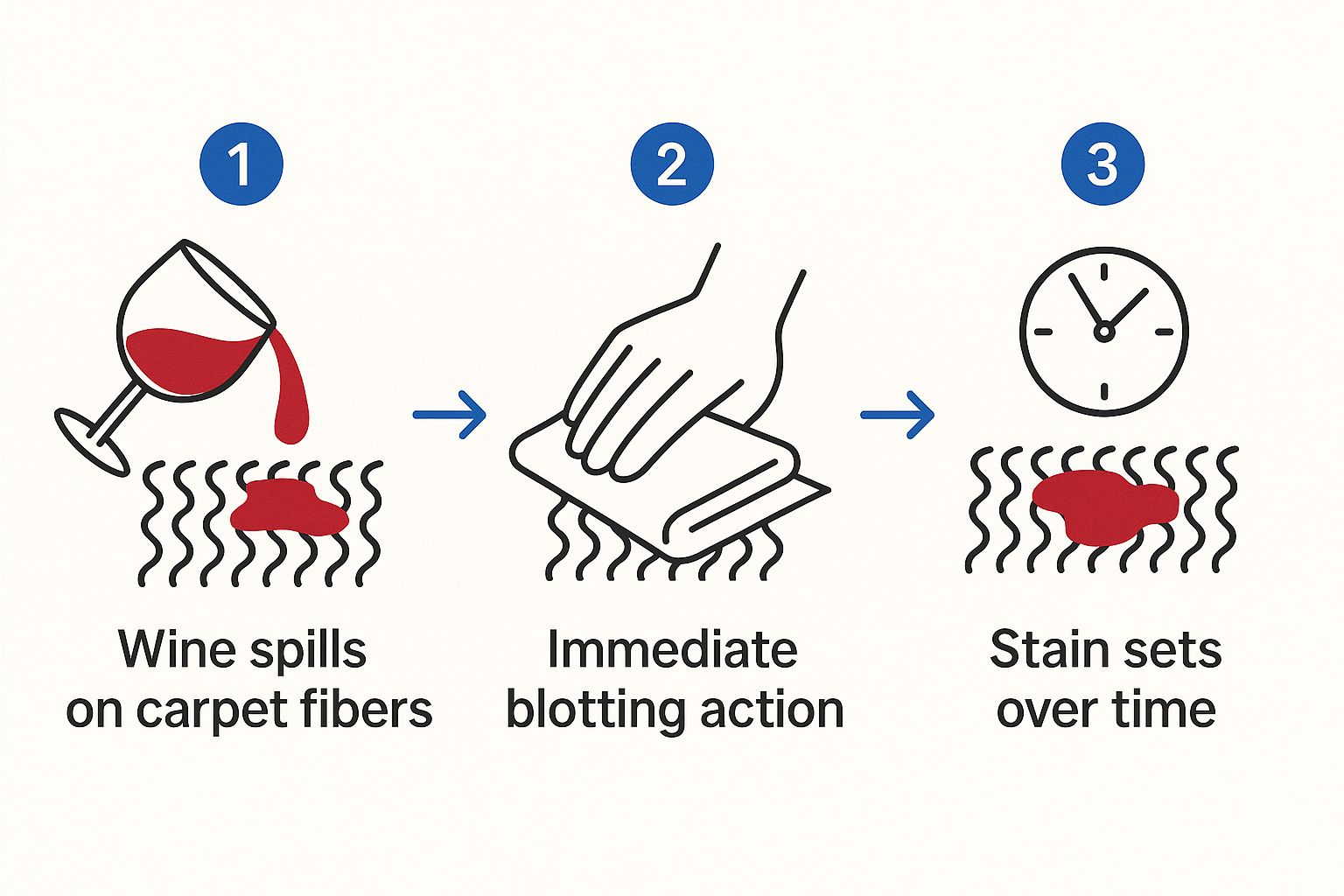
As you can see, the time you save by blotting right away prevents the wine from setting deep within the fibres. Once you’ve blotted up as much of the spill as you can, you're ready to move on to using a cleaning solution. For more detailed instructions on the next steps, have a look at our comprehensive guide on removing red wine from carpet.
Using White Vinegar and Baking Soda
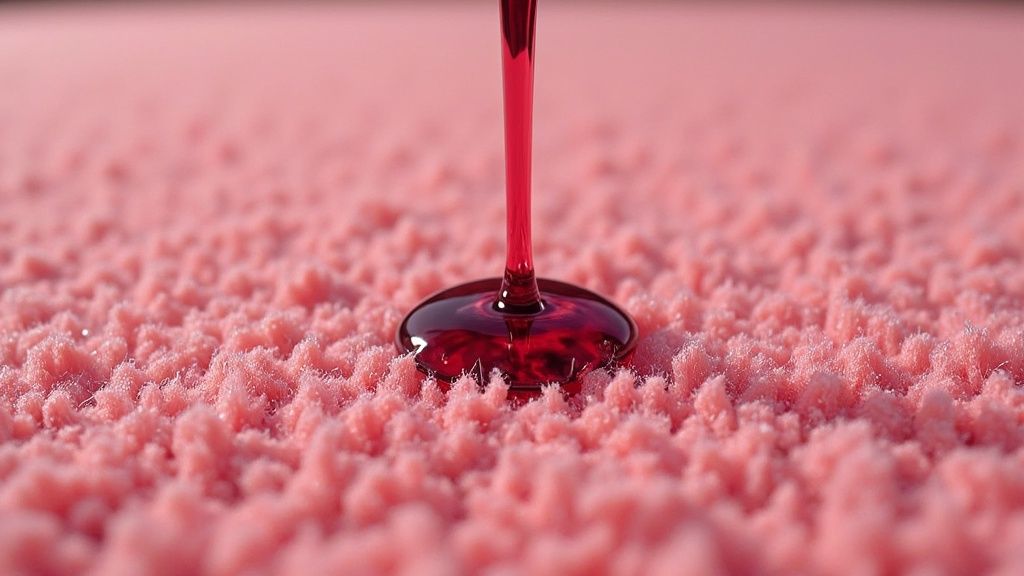
Once you’ve blotted away as much of that initial spill as you can, you can often deal with the rest using things you probably already have in your kitchen cupboards. Forget a cabinet full of harsh chemicals; two of the most effective tools for tackling a red wine spill on carpet are simple white vinegar and baking soda.
This combination is my go-to for an eco-friendly yet surprisingly powerful clean. The science behind it is pretty straightforward but incredibly effective. White vinegar's mild acidity gets to work breaking down the wine's pigments—the anthocyanins—which give it that deep red colour.
Preparing and Applying the Vinegar Solution
First things first, let's mix up your cleaning solution. Combine equal parts white vinegar and cool water in a spray bottle. It's really important not to use undiluted vinegar, as its acidity can be too harsh for certain carpet fibres, especially delicate materials like wool.
Give the stained area a light misting with your mixture. You're aiming to dampen the stained fibres, not to completely soak the carpet, its backing, and the underlay. If you oversaturate the carpet, you risk causing mould, mildew, and other problems that are far more serious than the original stain.
With the area damp, take a clean, white cloth and gently blot. You should start to see the red transferring from your carpet onto the cloth. Keep going with this process—spraying and blotting—until the stain starts to fade noticeably. If you're dealing with a particularly stubborn mark, our guide on how to remove stubborn carpet stains has a few more tricks up its sleeve.
Using Baking Soda to Lift the Stain
Now it’s time for the baking soda to do its magic. While the vinegar works on the stain's colour, the baking soda's job is to draw out the moisture along with any leftover discolouration. To do this, you’ll need to make a paste.
- Mix three parts baking soda with one part water.
- You're looking for a thick consistency, a bit like toothpaste.
Gently spread this paste over the entire damp, stained area, making sure it's completely covered. There's no need to scrub it in aggressively; a generous layer over the top is all you need. The baking soda will now get to work absorbing the vinegar and the dissolved wine residue from deep within the carpet pile.
This same absorption principle is why you sometimes hear about people using salt. Salt is a desiccant, meaning it pulls moisture out of its surroundings. It can draw a surprising amount of wine from carpet fibres before it has a chance to set. You can find plenty of anecdotal support for this method across UK home care sites like Good Housekeeping.
Expert Tip: Be patient and let the baking soda paste dry completely. This is a critical step. It could take several hours, or even overnight if you've applied it thickly. Rushing this part will just leave you with a damp, sticky mess instead of a dry powder that's easy to vacuum up.
Once the paste is bone dry and has formed a crust, you're on the home stretch. Grab your vacuum cleaner and thoroughly hoover up all the dried baking soda. Pass over the area a few times from different angles to make sure every last bit of powder is gone. What you should be left with is a fresh, clean carpet, completely free of that dreaded red wine stain.
The Club Soda And Salt Method
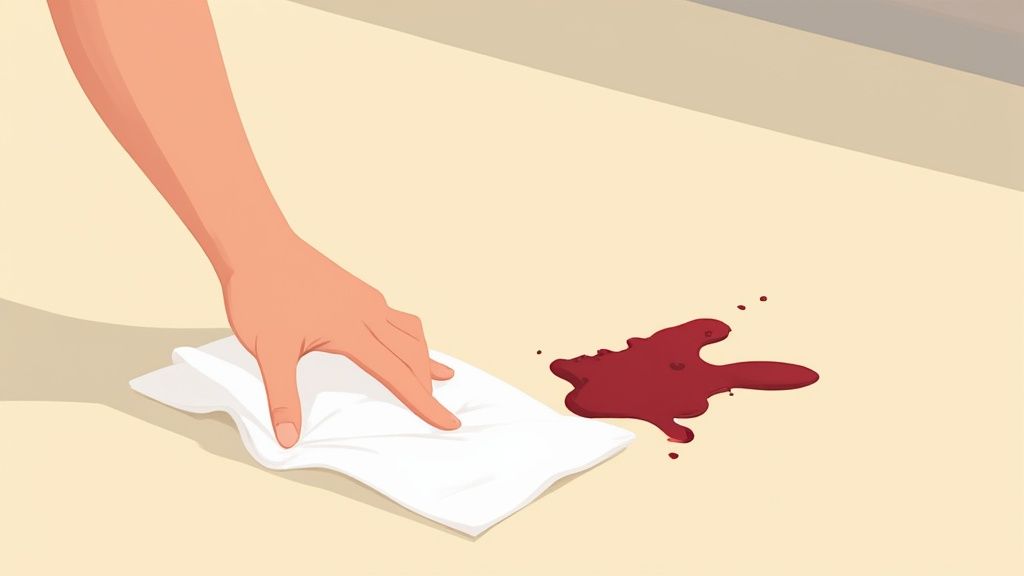
If you're after a classic, tried-and-tested trick that has saved countless carpets, this is it. The combination of club soda and salt is a surprisingly powerful remedy for a fresh red wine spill on carpet, and the best part is it relies on basic pantry items and a little bit of patience.
The secret hero here is the carbonation in the club soda. Those tiny bubbles are doing more than just fizzing; they're actively working to lift the wine pigments from deep within your carpet fibres, which makes them far easier to blot away.
Putting Club Soda And Salt To Work
Right, so you've already blotted the initial spill with a dry cloth. Now it's time to bring in the soda. Gently pour a small amount of club soda directly onto what's left of the stain. You don't need to flood the area—just use enough to cover the discoloured fibres.
You'll see it start to fizz almost immediately. Let it do its thing for a minute or two, then grab a fresh, clean cloth and get back to blotting. Remember to press firmly and lift, always working from the outside of the stain inwards to stop it from spreading.
Once you’ve blotted as much as you can and the stain is just damp, it's salt's turn. Don't be shy here. You'll want to generously cover the entire damp patch with a mound of ordinary table salt, creating a thick layer that completely hides the stain underneath. The salt now acts like a sponge, drawing the wine and club soda mixture up and out of the carpet fibres.
The Cleanup And Aftercare
Now for the easiest, but most crucial, part: waiting. You have to let the salt sit until it's completely dry. For a small spill, this might only take a few hours. For a particularly nasty one, I've often recommended leaving it overnight to make sure it has absorbed as much of the stain as possible. You'll actually see the salt turn a pinkish colour as it soaks everything up.
A Quick Note On Other Solutions: While this method is very effective, some stubborn stains might need a different approach. For example, a mix of dish soap and hydrogen peroxide can be potent because the soap breaks down the wine's components while the peroxide oxidises its colour. Be warned, though: as it has bleaching properties, you must test it on a hidden area first to avoid any disasters.
Once the salt is bone dry and has formed a crust, it's time to get rid of it. The best way is to use the hose attachment on your vacuum cleaner to suck up all the dried salt, which avoids risking damage to the main brush. Go over the area several times to be sure all the salty residue is gone.
After vacuuming, you can gently fluff the carpet fibres back up with your fingers. This method not only gets rid of the stain but also leaves no chemical residue behind, making it a great choice for a safe, complete clean. When the whole ordeal is over, it might be a good time to give the entire room a refresh. You can find more tips in our guide on how to deep clean carpets at home.
Tackling Tough Stains with Peroxide
So, what happens when the gentler home remedies don't quite cut it, or you're faced with a slightly older red wine spill on carpet? It’s time to bring out something a little stronger. For these more stubborn jobs, a carefully mixed solution of hydrogen peroxide and clear washing-up liquid can work wonders.
A serious word of warning here, though. Hydrogen peroxide is an oxidising agent, which is a technical way of saying it can bleach things. If you use it carelessly on a dark or brightly coloured carpet, you could end up with a permanent light patch that’s far more obvious than the original wine stain.
You Absolutely Must Do a Patch Test
Before you even think about putting this mixture on the stain, you must perform a patch test. I can't stress this enough. It’s a non-negotiable step that will save you from a potential carpet disaster.
You need to find a hidden bit of the same carpet to test your solution. Good spots are usually:
- Inside a wardrobe.
- Under a heavy sofa or bed that you never move.
- On a spare piece of carpet, if you were lucky enough to keep an offcut.
Mix up just a tiny amount of the solution, apply a single drop to your hidden test area, and leave it for 15-20 minutes. Then, blot it with a damp cloth. If you see any colour lift onto the cloth or the carpet has lightened, stop right there. This method isn't safe for your carpet.
How to Mix and Apply the Solution
Once you’ve done your patch test and everything looks good, you can get to work on the stain itself. You’ll want a simple mix of about three parts hydrogen peroxide (the standard 3% household kind) to one part clear washing-up liquid.
Apply this solution to the stain, but don't overdo it. Using a spray bottle is a great way to get light, even coverage. Your goal is to dampen the stained fibres, not to soak the carpet and its backing. Let the solution sit and do its thing for about 15-20 minutes. You should start to see the stain fading as the peroxide gets to work on the wine’s colour.
It’s important to remember that the success rate for any home remedy drops dramatically after 24 hours. Once the wine has had time to fully oxidise and bond with the carpet fibres, it often takes professional-grade products to break down those set-in tannins.
Key Takeaway: The final, most crucial part of this process is the rinse. After you've blotted the stain away, you have to get every last bit of that cleaning solution out. Any soapy residue left behind will become sticky and act like a dirt magnet, leaving you with a dark, grubby patch over time.
To rinse it properly, take a fresh, clean cloth, dampen it with cold water, and just keep blotting the area. This dilutes and lifts out any remaining soap from the carpet. This rinsing stage is also a vital part of our professional carpet cleaning process, as it’s the only way to guarantee a truly clean, residue-free finish.
When You Should Call a Professional
Even with the best intentions and a cupboard full of home remedies, some red wine spills are simply too much for a DIY approach. Knowing when to admit defeat and call in an expert is a skill in itself. If you keep working on a stubborn stain, you can sometimes make things worse, potentially setting it for good.
The key is recognising when you've hit a wall. If you’ve tried a gentle cleaning method once or twice but can still see that faint, shadowy outline of the spill, it’s time to stop. Repeatedly soaking the area can damage the carpet fibres and, even worse, saturate the backing and underlay. This creates a perfect breeding ground for mould and mildew.
Situations Demanding an Expert
There are a few scenarios where calling a professional carpet cleaner should be your first and only thought. Trying to tackle these yourself is a gamble that rarely pays off and could leave you with permanent damage.
You should always call a pro in these situations:
- Delicate or Natural Fibres: If your carpet is made of wool, silk, or another natural fibre, many household cleaners are a recipe for disaster. Their pH levels can be all wrong, leading to colour loss or destroying the texture of the fibres completely.
- A Very Large, Saturated Spill: When a whole glass—or bottle—of wine has soaked a big patch of your carpet, blotting just won’t cut it. That liquid has already seeped deep into the underlay, and only professional-grade extraction equipment has the power to pull it all out.
- Older, Set-In Stains: Found a red wine stain that’s been hiding for days or even weeks? Home remedies are unlikely to make a dent. By that point, the wine has oxidised and chemically bonded with the carpet fibres.
What to Expect From a Professional Service
When you hire a reputable company, you’re not just paying for a machine. You’re paying for experience, know-how, and some seriously powerful technology. Professionals use methods like hot water extraction, which shoots a specialised cleaning solution deep into the carpet pile before sucking all the grime and liquid back out with incredible force.
This process removes far more dirt and moisture than any machine you could rent or buy. More importantly, they understand stain chemistry. They’ll use specific agents designed to break down the tannins in red wine without harming your carpet. A critical mistake many people make is using heat, which can permanently set the stain by caramelising the sugars in the wine. It's why every reputable guide, like this one on how to remove red wine stains, insists on using cold water.
Finding the Right Company: Always check that a technician is fully insured and certified. A true professional will be happy to walk you through their process and explain which products they’re using, making sure they’re safe for your home, especially if you have children or pets.
Making that call is a smart investment in your home. It protects the value and look of your carpet for years to come. If you have pets, it’s also worth taking a look at our guide on pet-friendly carpet cleaning methods for other useful maintenance tips.
Common Red Wine Stain Questions
Even after you've dealt with a red wine spill, a few questions might still be nagging at you. Getting the right answers gives you peace of mind about the job you’ve just done and, more importantly, equips you to handle any future accidents with confidence. Let's tackle some of the most common queries we get.
Are Commercial Red Wine Stain Removers Better?
This is a question we hear a lot, and the simple answer is: they can be fantastic. Specialised products from brands like Dr. Beckmann or Vanish are engineered to break down the specific tannins in red wine, which is why they often get such great results.
Their main advantage is convenience – they’re ready to go straight out of the bottle and have been tested on countless stains. But that doesn't mean you can skip the golden rule: always perform a spot test on a hidden part of your carpet first. This is absolutely critical. Some commercial cleaners can be too aggressive for certain carpet fibres, especially natural ones like wool, potentially causing more harm than good.
So yes, they're a brilliant thing to have in the cupboard for a rapid, emergency response.
What If the Spill Is on My Wool Carpet?
If you have a wool carpet, you must be extra careful. Wool is a beautiful, durable fibre, but it's also delicate. It can be permanently damaged by harsh chemicals, high heat, or even scrubbing too hard. The wrong move can cause the fibres to felt and ruin their texture, or lead to colour loss that can't be reversed.
For wool, always start with the gentlest method.
- Blot the spill immediately – don't rub.
- Use a little club soda to gently coax the stain out.
- Follow up with the salt trick to draw out the last of the moisture and pigment.
You should avoid any cleaners containing hydrogen peroxide or other strong oxidising agents. If a faint stain is still visible after your best efforts, it is absolutely essential to call a professional who specialises in natural fibres. Don't take the risk; the cost of an expert clean is a fraction of what it costs to replace a beautiful wool carpet.
Expert Takeaway: A bit of prevention goes a long way. Applying a fabric protector spray can make liquids bead up on the surface, buying you precious time to act. Another smart move is using a stylish, washable area rug in high-risk zones like the dining room – it can save you a world of stress.
Beyond tackling specific spills, consistent care is what truly protects your carpet's lifespan. For more on this, mastering general floor mat and carpet cleaning techniques provides a wealth of information that will help keep all your floor coverings looking their best. Protecting your investment is about more than just emergency clean-ups; it's about good habits.
If you're battling a stubborn stain or just want to bring your carpet back to life, the team at AG Carpet Specialists is here to help. Our professional, eco-friendly approach ensures a deep clean that’s safe for your home and family. Contact us today for a free, no-obligation quote!


