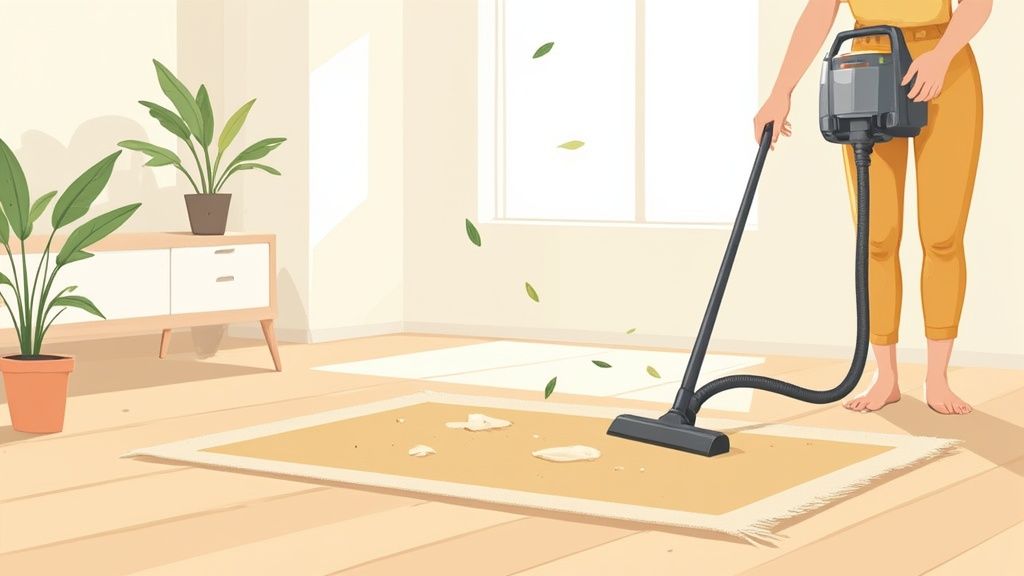
When it comes to cleaning a sisal rug, you need to throw out the rulebook. Forget everything you know about sprays and damp cloths; with sisal, you have to adopt a completely dry-cleaning mindset.
Moisture is the number one enemy of these beautiful, natural fibres. Water causes irreversible stains, browning, and even shrinkage. The secret to keeping your sisal rug looking its best is to act fast, blot up any spills immediately, and stick to specialised dry cleaning powders.
Why Sisal Rugs Demand a Different Cleaning Approach
Before you even think about grabbing your usual carpet cleaner, it’s vital to understand what makes sisal so different from the synthetic rugs you might be used to. Sisal comes from the tough fibres of the agave plant, giving it that gorgeous, organic texture that brings warmth and style into a room. But this natural quality is also its biggest weakness when it comes to cleaning.
Sisal fibres are incredibly absorbent – they act just like a sponge. The moment they touch water, they swell up. As they dry, they shrink and can distort, leaving you with a warped or buckled rug. Even worse, the moisture can pull out the natural tannins from within the plant fibres, which creates a permanent, dark "water stain" or browning effect. This is known as cellulose browning.
The Problem with Moisture
Here in the UK, our naturally humid climate can make these problems even worse. A damp rug will take much longer to dry, which dramatically increases the risk of:
- Permanent Staining: Even a spill of clean water can leave a dark, ring-like stain that’s almost impossible to get out.
- Fibre Warping: The rug can quickly lose its flat shape. You might see the edges curl up or the whole rug start to buckle in the middle.
- Mould and Mildew Growth: Any trapped moisture is a perfect breeding ground for mould, leading to musty smells and potential health issues.
The golden rule for sisal care is simple: treat it like a material that cannot get wet. This means shifting your mindset from traditional 'wet' cleaning to proactive 'dry' maintenance.
Understanding this is the first step to cleaning your sisal rug without ruining it. By avoiding liquids and using the right techniques, you can keep your rug’s colour, shape, and texture beautiful for years. For a wider look at different cleaning options, you can learn more about various rug cleaning methods that are suited to different materials. This knowledge will help you avoid costly mistakes and tackle any cleaning job with confidence.
Your Essential Sisal Rug Cleaning Toolkit
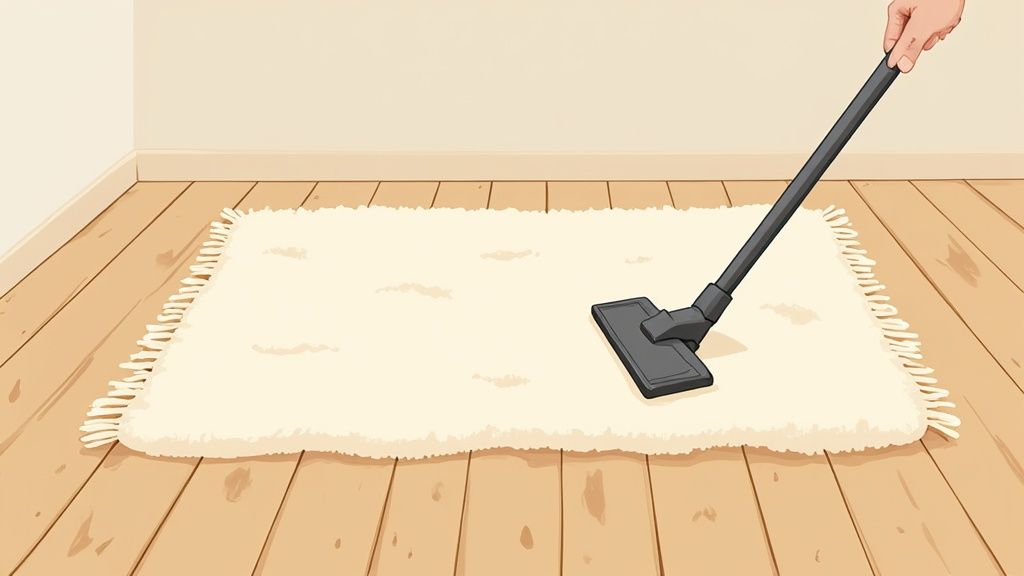
To keep your sisal rug looking its best, having the right tools on hand before a spill happens is half the battle. Forget reaching for your usual all-purpose cleaners; they can cause real damage to these delicate natural fibres. Instead, you'll need a specific kit built for a water-free cleaning approach.
Your most valuable tool will be a vacuum cleaner with a suction-only setting. This is non-negotiable. Beater bars or rotating brushes are far too aggressive and will quickly fray and shred the beautiful woven fibres, leading to permanent damage. An upholstery attachment is often the perfect, gentle alternative for the job.
Your Spill First-Response Kit
For those inevitable spills and stains, a simple but effective response kit is key. Make sure you have these items ready to go:
- A blunt knife or scraper: Perfect for lifting away solid messes like mud or dropped food without accidentally pushing them deeper into the weave.
- Highly absorbent, undyed cloths: Simple white microfibre or cotton cloths are ideal. They'll blot up liquids effectively without any risk of colour transfer.
- A soft-bristled brush: You’ll need this for gently working in dry cleaning powder and then brushing away any residue afterwards.
A common mistake we see in the UK is people using wet shampoos on sisal, which almost always leads to watermarks, shrinking, and texture damage. The professional approach relies on dry cleaning compounds that absorb dirt without moisture. You can get more expert advice on sisal carpet cleaning from specialists in the field.
Finally, the secret weapon for tackling stains safely is a quality dry cleaning powder or a solvent-based spot remover made specifically for natural fibres like sisal. These products are designed to lift stains without the risks associated with water. You can find some excellent choices in our guide to the best eco-friendly carpet cleaning products available today.
Mastering Routine Care to Prevent Grime Buildup
The real secret to keeping a sisal rug looking pristine isn't about intensive scrubbing—it's all down to consistent, gentle care. A proactive approach stops dirt and dust from getting lodged deep into the rug’s tight, natural weave.
This simple habit dramatically reduces the need for emergency stain removal later on. A straightforward weekly and monthly routine is really all you need to keep your sisal looking fresh and vibrant.
Perfecting Your Vacuuming Technique
When it comes to sisal care, your vacuum cleaner is your most valuable tool, but only if you use it correctly. Always use a suction-only head or an upholstery attachment. A beater bar with rotating brushes is far too harsh; it will snag, fray, and eventually ruin the beautiful woven fibres.
The trick is to be slow and methodical. Make deliberate passes across the entire surface, giving the suction enough time to lift fine grit and dust from the very base of the weave.
- High-Traffic Areas: For busy spots like hallways or living rooms, a good vacuum at least twice a week is essential. This stops everyday dirt from being trodden in and becoming a bigger problem.
- Low-Traffic Areas: In quieter spaces like bedrooms, a thorough vacuum once a week is usually plenty.
For a broader look at flooring maintenance, our guide on how often to clean carpets has some great insights that you can apply to other materials in your home.
To make things easy, here’s a simple checklist to follow.
Weekly Sisal Rug Care Checklist
| Action | Frequency | Why It's Important |
|---|---|---|
| Thorough Vacuuming | 1-2 times weekly | Removes surface dirt before it gets ground into the fibres. |
| Spot-Check for Spills | Daily/As needed | Tackling spills immediately prevents them from setting and staining. |
| Rotate the Rug | Every 3-6 months | Ensures even wear from foot traffic and sunlight, preventing fading. |
Following this simple schedule is the best way to preserve your rug's structure and appearance for years to come.
Rotating for Even Wear
Another crucial habit to get into is regular rotation. Over time, sunlight can cause noticeable fading and foot traffic creates obvious wear patterns, particularly if you have furniture placed on the rug.
To make sure your rug wears evenly and keeps a consistent colour, give it a 180-degree turn every three to six months. It's a simple action that makes a huge difference by distributing the effects of daily life across the entire surface.
By weaving these simple habits into your cleaning schedule, you’re not just cleaning your rug; you are actively preserving it. This preventative mindset is hands-down the most effective way to care for natural fibres like sisal.
A Practical Guide to Removing Spills and Stains
That sinking feeling when a drink goes flying onto your beautiful sisal rug is something we've all felt. But it doesn't have to be a disaster. The key to success is acting fast with the right technique. There are a few golden rules I always tell my clients: get to it immediately, blot never rub, and always scrape away any solid bits first. Truly, speed is your best friend in stopping a small spill from becoming a permanent stain.
When you're dealing with a liquid spill – a dropped cup of tea or a splash of red wine – the mission is simple: get as much of it out as you can, as quickly as you can. Grab a clean, dry cloth (make sure it’s undyed!) and press it firmly onto the spill. You'll see the liquid wicking up into the material. Lift the cloth, find a dry patch, and repeat until it's not pulling any more moisture out. Whatever you do, don't rub. All that does is drive the liquid deeper into the fibres and risks making them fray.
Tackling Different Types of Messes
Right, once you've blotted the area dry, what you do next really depends on what you're up against.
- For muddy footprints: This one feels counterintuitive, but you need to let the mud dry completely. If you try to clean wet mud, you'll just smear it into a much bigger mess. Once it's hard, use a blunt knife or even the edge of a spoon to gently scrape off the solid chunks. Then, you can simply vacuum up the dusty bits left behind.
- For liquid spills: After you've blotted everything you can, it's time to reach for a dedicated dry cleaning powder. These are brilliant because they're designed to absorb the rest of the stain without introducing any damaging moisture.
This image gives you a quick visual guide for what to do in the heat of the moment.
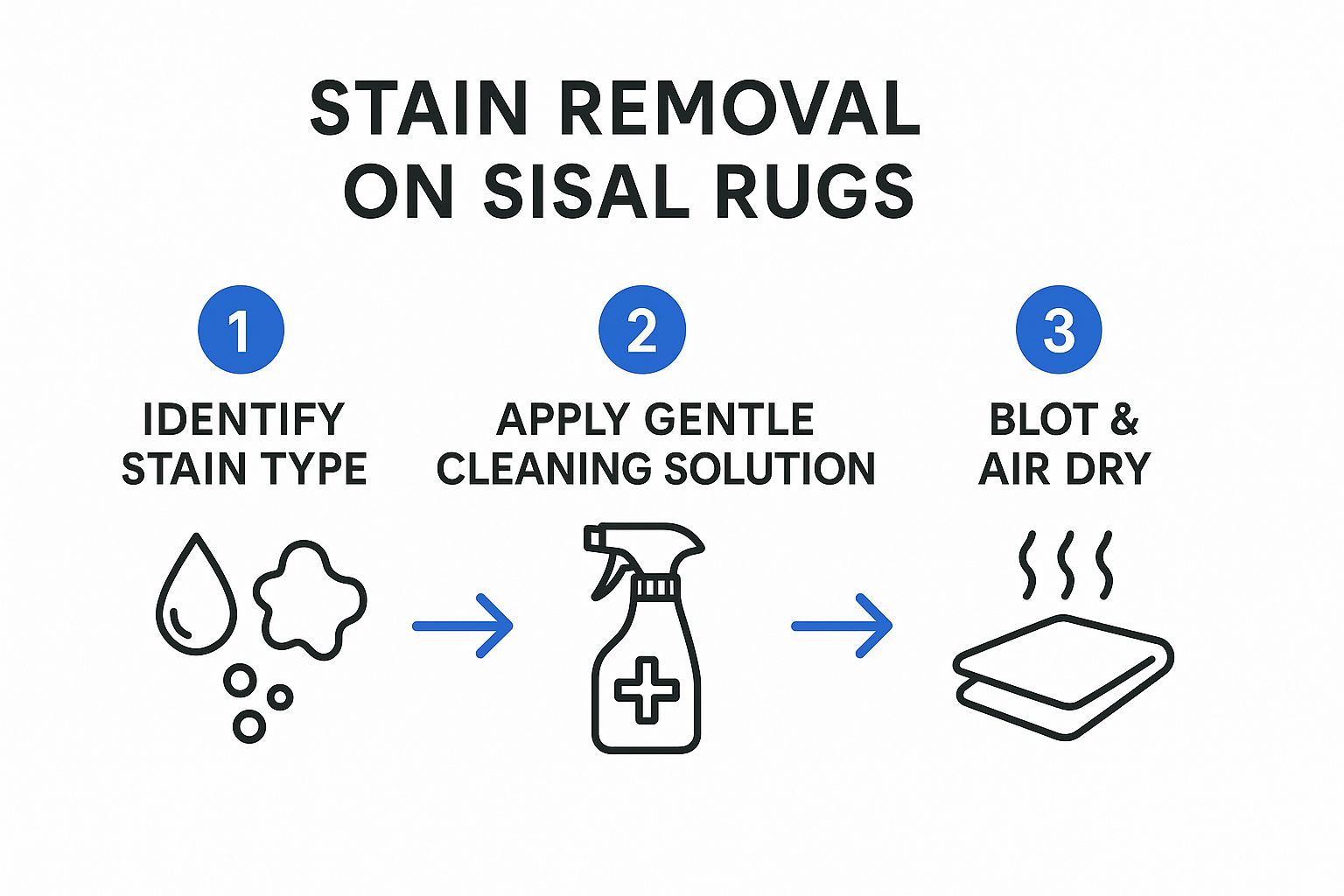
The main takeaway here is that your immediate reaction is the most important part of the job. Identifying the spill and sticking to a dry removal method is what makes all the difference.
Using a Dry Cleaning Powder Effectively
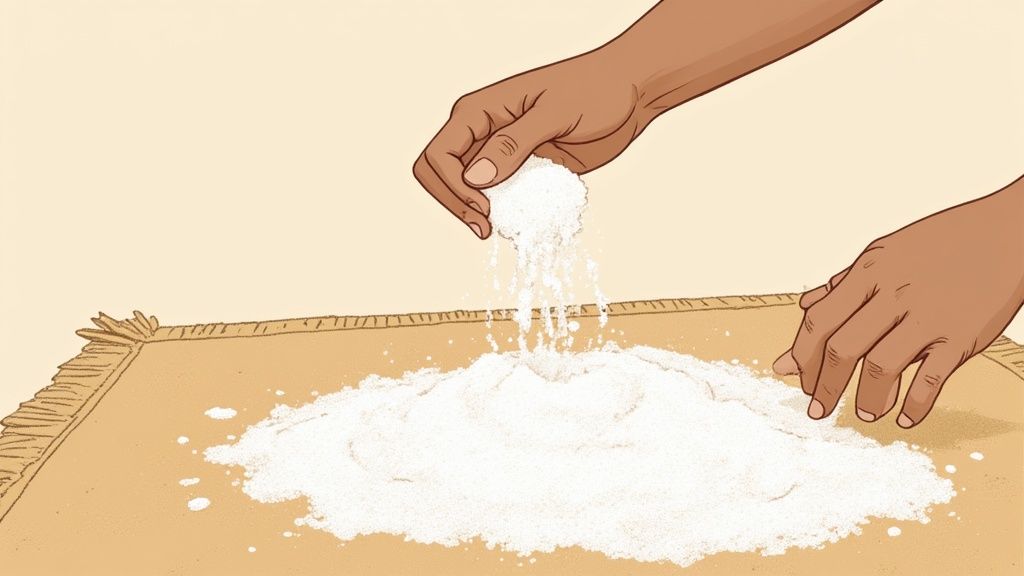
To get the best results from a dry powder, sprinkle it generously over the affected area until the stain is completely covered. Next, take a soft-bristled brush and gently work the powder into the weave of the rug. You don't need to scrub hard; a light agitation is all that’s required to get it working.
Now, let the powder sit. Check the manufacturer's instructions, but it's usually at least an hour – sometimes longer for a really stubborn mark. This gives it the time it needs to break down and absorb the stain. Finally, use your vacuum's suction-only attachment and go over the area thoroughly to remove every last trace of the powder. If you're still left with a difficult spot, our guide on how to remove stubborn carpet stains has a few more advanced tricks up its sleeve.
By sticking to these dry methods, you’re working with the natural properties of your sisal rug, not against them. It’s the best way to ensure it stays looking fantastic for years to come.
Knowing When to Call a Professional Rug Cleaner

While your own eco-friendly toolkit is fantastic for day-to-day care and catching spills as they happen, some jobs are just too big or too risky to tackle yourself. Knowing when to put down the cleaning brush and pick up the phone is a key part of caring for a sisal rug without causing irreversible damage.
Sometimes a stain has simply sunk too deep, or the general soiling is too widespread for a dry powder to handle. If your rug has suffered serious water damage, maybe from a burst pipe or a massive spill, calling a professional is your only safe bet. They have access to specialised low-moisture extraction gear and controlled drying rooms that are impossible to replicate at home. Trying to dry a saturated sisal rug on your own is an almost certain path to warping, browning, and heartbreak.
Signs It's Time for an Expert
You should get in touch with a professional cleaner straight away if you spot any of these issues:
- Stubborn, Set-In Stains: That red wine ring or old coffee mark that’s had weeks to settle in isn’t going to budge with DIY methods. In fact, you could just make it worse.
- Widespread Soiling: If your once-bright rug now looks dull and grimy all over from years of foot traffic, it needs a professional-grade deep clean to bring it back to life.
- Lingering Odours: A musty, unpleasant smell that bicarbonate of soda can’t shift often means there’s an issue deep down in the rug’s fibres that needs expert attention.
A reputable cleaner will use professional-grade, dry-cleaning compounds and specialist techniques that lift dirt without introducing damaging moisture. This really is the gold standard for natural fibre care.
When you’re looking for a service in the UK, always ask if they have specific experience with sisal and other natural fibres. Their understanding of how delicate these materials are is absolutely essential. To get a better idea of what to expect, you can read about the professional carpet cleaning process and the steps they take. Properly vetting your cleaner is the best way to ensure your beautiful rug is in safe hands.
Your Sisal Rug Questions Answered
When you own a beautiful sisal rug, a few questions are bound to pop up. It's completely normal to feel a bit unsure, especially when you're trying to do the right thing to protect your investment. Getting the right advice is key to avoiding common cleaning mistakes.
Let’s clear up some of the most common questions we hear from UK homeowners.
Can I Use a Steam Cleaner on My Sisal Rug?
In a word: no. Steam cleaning is the absolute worst thing you can do to a sisal rug. It’s a nightmare combination of high heat and moisture, which is sisal’s biggest enemy.
The hot water forces the natural plant fibres to swell and warp, and you'll almost certainly be left with a permanent, ugly brown water stain. This reaction has a technical name: cellulose browning. For any kind of deep clean, you must stick to approved dry-cleaning methods only.
How Do I Get Pet Smells Out of a Sisal Rug?
Dealing with pet smells, particularly urine, is a two-part mission. You need to act fast.
- Blot Immediately: The first step is to grab a clean, dry cloth—something highly absorbent is best—and blot up as much of the liquid as you possibly can. Don't rub, just press firmly.
- Soak Up the Odour: Once blotted, be generous and sprinkle bicarbonate of soda or a specially made dry carpet powder over the entire area. Let it sit for a good few hours (overnight is even better) so it can work its magic and absorb the smell. Then, just vacuum it all up using a suction-only setting.
Is It Possible to Remove a Water Stain from Sisal?
This is probably the toughest challenge for any sisal owner. Water stains are incredibly stubborn because the mark isn't just surface dirt; it's a chemical change happening deep inside the fibre.
If the spill is fresh and small, you might have a fighting chance. Try blotting it with a dry cloth and then immediately aim a hairdryer at the spot on a cool setting. Sometimes, this can stop a watermark from setting. For anything more than a tiny, fresh spill, it’s best to call a professional.
If you're stuck with a stubborn stain or your rug just needs an expert refresh, AG Carpet Specialists provides professional care for delicate natural fibres. Get in touch for a free quotation and let us bring your rug back to life.